Recipes tagged "Gluten-free rye flour"
2 recipes found
-
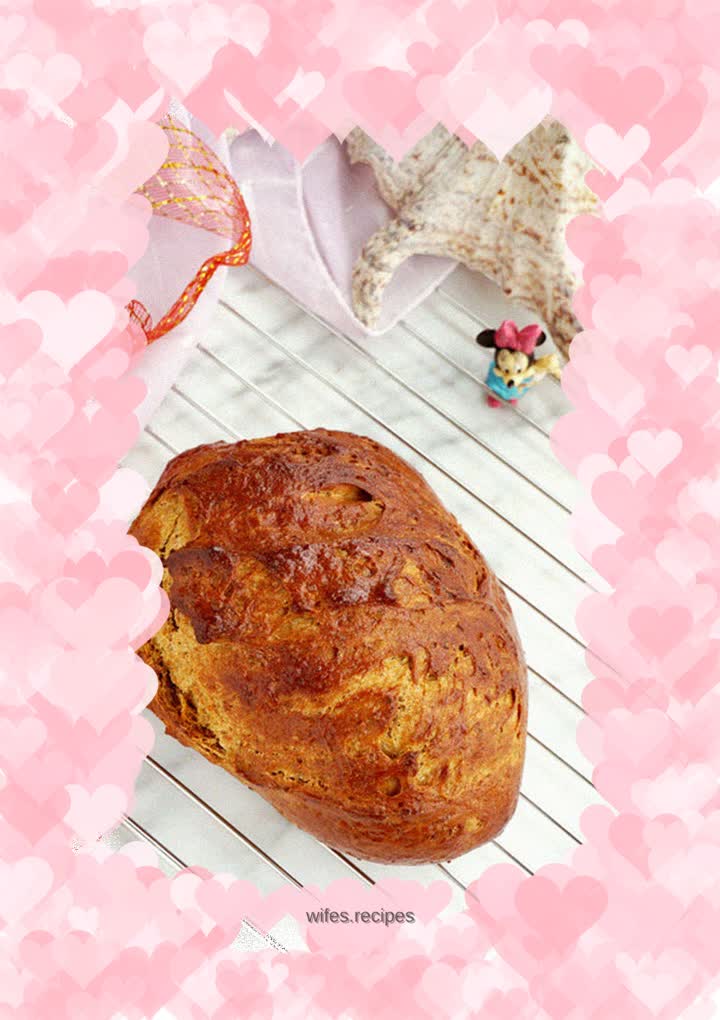
Swedish rye bread
This rye bread uses licorice-flavored anise and cumin, as well as orange peel and a hint of cardamom, so we can totally think of it as a bread version of ouzo. Today, nutritionists have proven that orange peels, licorice-flavored spices, and bitter foods are good for digestion, and many traditional cultures have recognized this for centuries. This bread is made from a mixture of natural sourdough starter and artificial yeast, so it has a richer flavor than those left solely with artificial yeast. The lactic acid produced by fermentation not only digests the flour in advance to a certain extent, but also makes the bread taste better and have a longer shelf life. That anise powder has always made people feel confused. I don’t know what kind of plant it corresponds to, and I haven’t been able to find this spice product. In the end I had to omit it. On the eve of making bread, I reluctantly searched Taobao. I still didn’t see anyone selling anise powder, but I found that under some pictures of plants, the names of anise and goosefoot were listed side by side. Although it is still impossible to connect the goosefoot with a specific plant image, the name is much more familiar than anise. There was no dried orange peel, so I found a piece of dried orange peel instead. I was worried that the taste of orange peel would be different from orange peel, so I added some orange zest. Besides, it didn’t say it was dried orange peel. If it was a whole piece of orange peel, it should be removed after cooking, right? I didn't find the answer to this, so I just took it upon myself to throw away the boiled orange peel. Stir all the ingredients into a ball, knead for only 4 minutes, and still be able to pull out the film, which seems a bit difficult. After you can barely pull out the dough, stop quickly, because the entire kneading process needs to be completed within 6 minutes. Do not over knead the dough, otherwise the rye dough will be very sticky. I was thinking about whether to use a toast box to make the bread into the shape of a sandwich bread, but suddenly I discovered that most breads are cut before baking, and breads cut before final proofing (such as Swedish rye bread) are different in appearance. During the expansion process, the Swedish rye bread's incisions are filled in, causing them to expand outward. As it bakes, the cut appears to have healed, which makes the crust a different color from the cut. With just two lines, I immediately changed my mind. The bread is shaped into shuttles, cut, fermented, then brushed with egg wash and baked. The opening of the incision was completely flattened, leaving only a few holes. The crust of the bread couldn't hold its strength and was somewhat torn. The whole shape is like a jagged rock, but the egg liquid makes it glow, which makes it look really strange. . . .
Baking Breakfast -
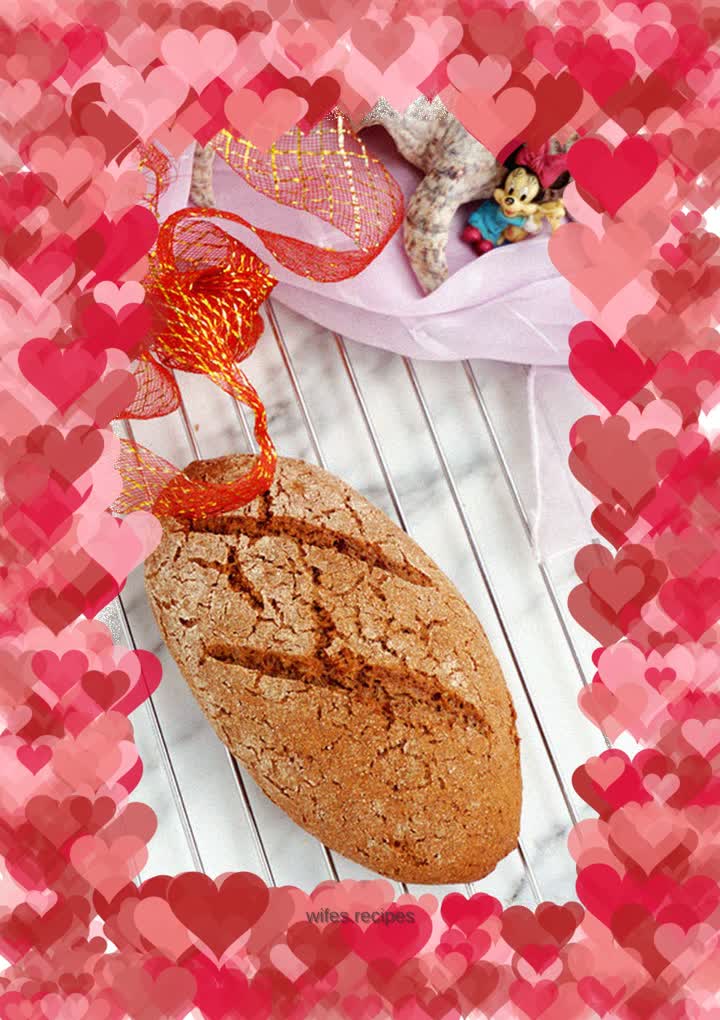
100% sourdough rye bread
There are many recipes for making rye bread, but few use 100% rye flour. Rye contains a special kind of gluten, but the content is very small (only 6%-8%). Therefore, it is difficult to form the structure of bread. It is difficult to make better bread without adding a large amount of high-gluten flour. There’s a lot of knowledge packed into sourdough rye bread. Rye flour is high in natural sugars and dextrins, as well as pentosan, which increases the strength and extensibility of the protein and can make the dough sticky if mixed for a long time, as you would for wheat bread. In addition, natural yeast starter can provide an acidic environment and slow down the speed of enzymes breaking down sugar during the mixing process. During fermentation, enzymes gradually release the sugars in the grains. If mixed and fermented, the bread will taste sweet and creamy, and the chew will be very different from other breads. It seems that I caught a glimpse of something wrong with my bread in this passage, but I don’t know if the cracks on the surface of the bread are normal, and I don’t have a picture to show it. This bread is best made with a variety of rye flours, from fine gluten-free rye flour to coarse rye and even cracked rye. This recipe uses a blend of grains and a suitable soaking solution to increase enzyme activity. There weren't that many kinds of rye flour, so I had to stick to the only rye flour I had on hand. What difference the results will make, only God knows. . . . Since the dough contains very little gluten, the crumb is very firm and doesn't have the large, irregular holes found in standard hearth-fired bread. It is indeed a very dense bread, and people who don’t like whole grains probably won’t like it too much. . . . .
Baking old man