Recipes tagged "Wild Coriander"
9 recipes found
-
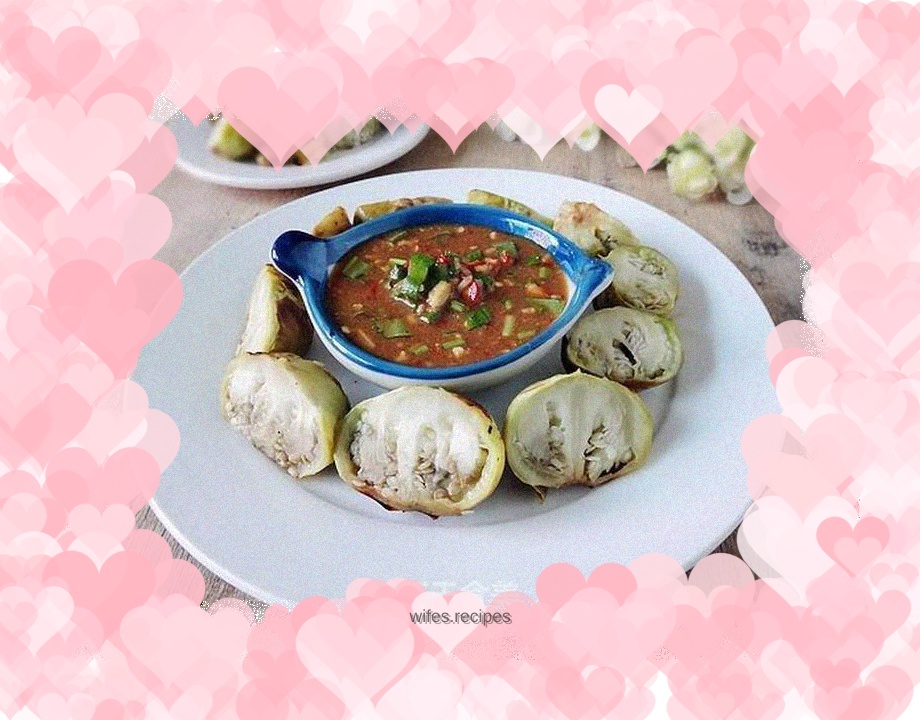
Burnt bitter fruit
Bitter fruit is a wild vegetable unique to Yunnan. It is also called bitter eggplant and is the fruit of the Solanaceae plant. Produced in southwest Yunnan, the fruit can be divided into two types: large bitter fruit and small bitter fruit depending on the degree of bitterness, shape and size of the fruit. The plant of Amaranthus macrocarpa resembles the plant of eggplant. The difference is that most of the plants of Big Bitter Fruit are purple, and the leaf edges have wavy cracks, and there are inverted hard spines on the leaf veins and opposite stalks. After blooming, the flowers are small lavender flowers, only one-third the size of eggplant flowers. It blooms and bears fruit every spring. The fruit is oblate and has many cracks. The diameter is about 3cm. The fruit is dark green when immature and orange when mature. It tastes bitter and cool, with a slightly sweet aftertaste. Local people love to eat it. The small bitter fruit is only about the size of a pea and has a sweeter aftertaste than the large bitter fruit. The dish I made for you today is the fire-roasted bitter nut. Since there is no charcoal grill, I can only roast it slowly on an electric stove. The taste of the bitter nut is sweet with a hint of bitterness. I like this taste very much. I ate all the big plate of bitter nut by myself. The bitter fruit has the functions of clearing away heat, detoxifying, reducing inflammation and soothing the throat.
Home cooking Private kitchen -
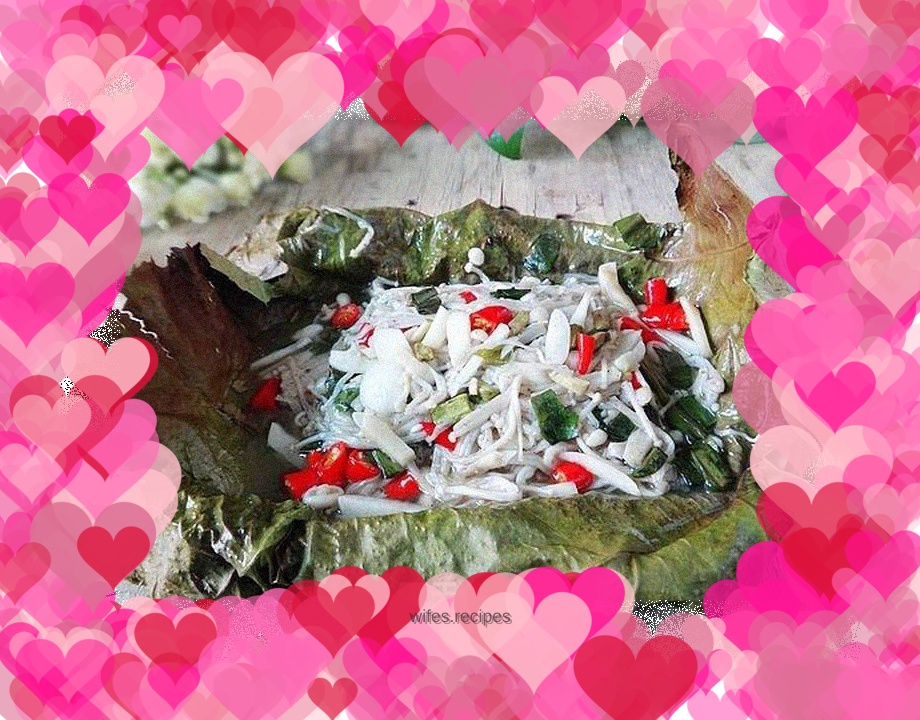
Braised Enoki Mushrooms
This dish is one of the varieties of traditional Chinese cooking. In the past, villagers would go to the river to catch some small fish and shrimps when they went to the mountains far away from home to catch some small fish and shrimps. Since there was no pot for cooking, the fish and shrimps they caught were put on wild loquat leaves. They were mixed with some salt, pepper and some wild herbs from the mountains, wrapped and cooked on the fire, and then cooked with the rice brought from home for lunch. Everyone thinks that the food cooked in buns is more delicious, so the buns are gradually popularized in families. Nowadays, with the popularization of small household appliances, few people use firewood anymore. Today’s baked enoki mushroom recipe was cooked in an oven because there was no charcoal fire to cook it. Not much change in taste. I used apple fig leaves to wrap the enoki mushroom leaves, which are called wild loquats by the locals. The fruits are edible and the young leaves can be used for cooking. Wild loquat belongs to the Ficus family. Because the leaves are enlarged and resemble an elephant's ear, it is also called elephant ear leafy vegetable. Because the fruit looks like an apple, it is also called Apple Ficus. Wild loquat leaves are sweet in taste and neutral in nature, and have the effects of strengthening the stomach, digesting food, and lowering blood lipids.
Hot dishes Home cooking -
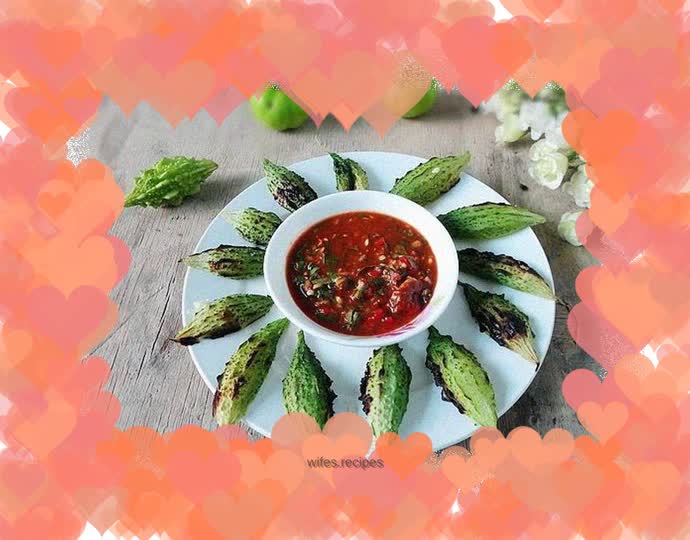
Burnt Wild Bitter Melon
I bought these wild bitter melons when I was on the street. I haven't eaten wild bitter melons for a long time and I miss the taste of sweetness after bitterness. Wild bitter melons are more bitter than ordinary bitter melons, but there will be a faint sweet aftertaste in your mouth after eating them. The ethnic minorities here like to cook wild bitter melons in the fire and then eat them with sauces for a unique flavor. Although the bitter melons are bitter, they are nostalgic, just like a person's life. Eating more wild bitter melon can promote appetite, detoxify and dispel cold. There are no charcoal grilled wild bitter gourds at home in the city, so I roast them on an electric stove and eat them with some sauce and condiments, which makes me eat an extra bowl of food.
Hot dishes Home cooking -
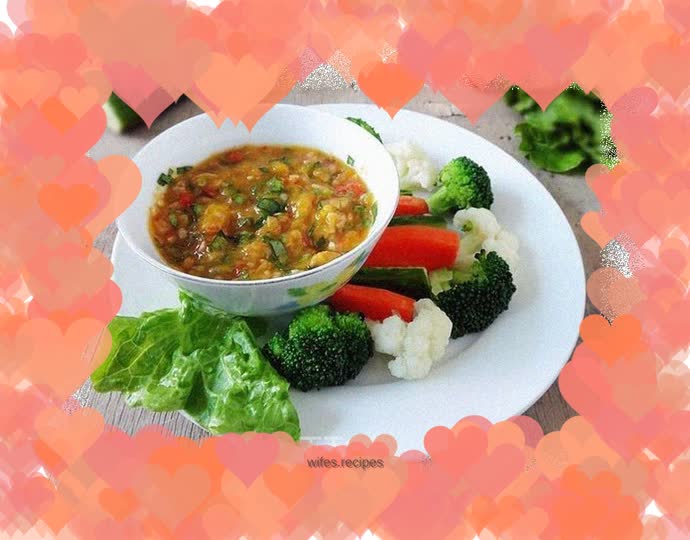
Dai Tomato Nami
People who have never tasted Dai food must think that Nanmi is a dish, but in fact, Nanmi is not a dish. Nanmi is a Dai word that can be translated as pickles. It is actually a dipping sauce used by Dai people to make dipping dishes. According to the different materials for making Nanmi, Nanmi is divided into many types: Nanmipa (green vegetable sauce), Nanmi Makman (tomato sauce), Nanmiah (sesame paste), Nanmi Tuoling (peanut butter), Nanmi Nuo (sour bamboo shoot sauce), Nanmi Buha (crab sauce), etc. Among them, vegetable sauce and tomato sauce are the most popular. Nanmi can be used to dip vegetables or meat slices. You can use it to dip whatever you like. All kinds of vegetables should be washed, blanched, and dipped in sweet and sour noodles. They are simple, nutritious, healthy, delicious, and appetizing. I saw a tamarillo seller on the street today and quickly bought a few to make at home. The tamarillos are more acidic than ordinary tomatoes. The fruit is rich in pectin, vitamins and iron. It is the best material for making tomato tamales.
Dai cuisine Garlic -

Eggplant mixed with chili sauce
Eggplant is a common vegetable on the table. There are many ways to eat eggplant. It is delicious grilled, stir-fried, steamed and mixed. Among these ways of eating, I prefer steamed eggplant. After steaming and mixing it with various seasonings, it is not only soft, glutinous, refreshing, oil-free, but also delicious with rice. Eggplant is rich in vitamin P. This substance can enhance the adhesion between human cells, enhance the elasticity of capillaries, reduce the fragility and permeability of capillaries, prevent capillary rupture and bleeding, and maintain normal cardiovascular functions.
Cold dishes Home cooking -
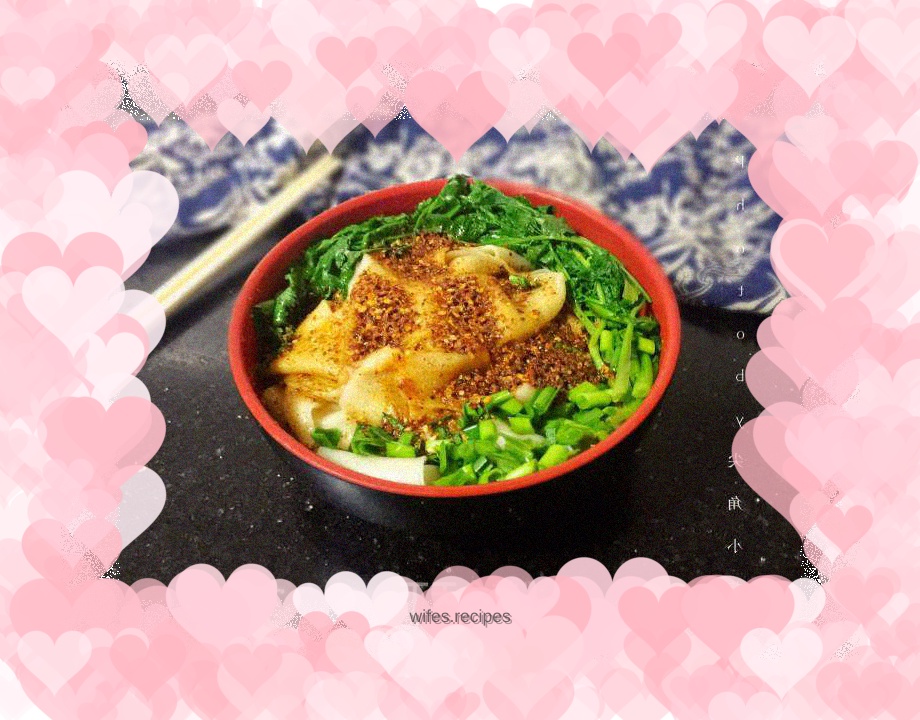
Oily noodles
What will happen if the fragrant fried noodles meet wild vegetables? The unparalleled deliciousness lingers on the tip of the tongue. This is the most delicious fried noodles I have ever eaten!
Staple food Pasta -
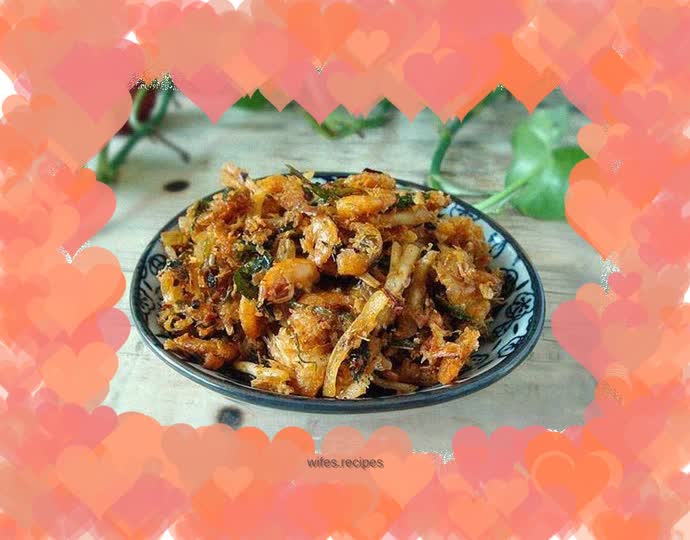
Pound river shrimp with garlic mortar
This dish is a local ethnic dish. The ethnic minorities in Pu'er like to pound everything in a garlic mortar and eat it, including bamboo shoots, eggplants, beans, river shrimps, etc., and even small crabs from mountain streams. Not to mention that these things are very delicious when paired with some wild seasonings from the mountains and pounded with a garlic mortar. The rice is also destroyed very quickly. This pounded river shrimp dish is particularly spicy, fresh and sweet, with no fishy smell at all, and is especially delicious with glutinous rice. The ingredient used in this dish, wild leeks, is called Yunnanese Yunnanese, also known as large leeks and wild leeks. It looks like a garlic sprout, and its leaves, stems, flowers, and roots are all edible. The wild leek moss tastes like a leek. But it is fatter, tenderer and more fragrant than leeks. The root of wild leek, also known as kohlrabi root, is an indispensable ingredient in making various ethnic dishes in Yunnan. The scientific name of wild coriander is Echinacea, and it is called Awa coriander in Yunnan. It is an indispensable seasoning for making Wa dishes, so it is called Awa coriander.
Chinese cuisine Yunnan cuisine -
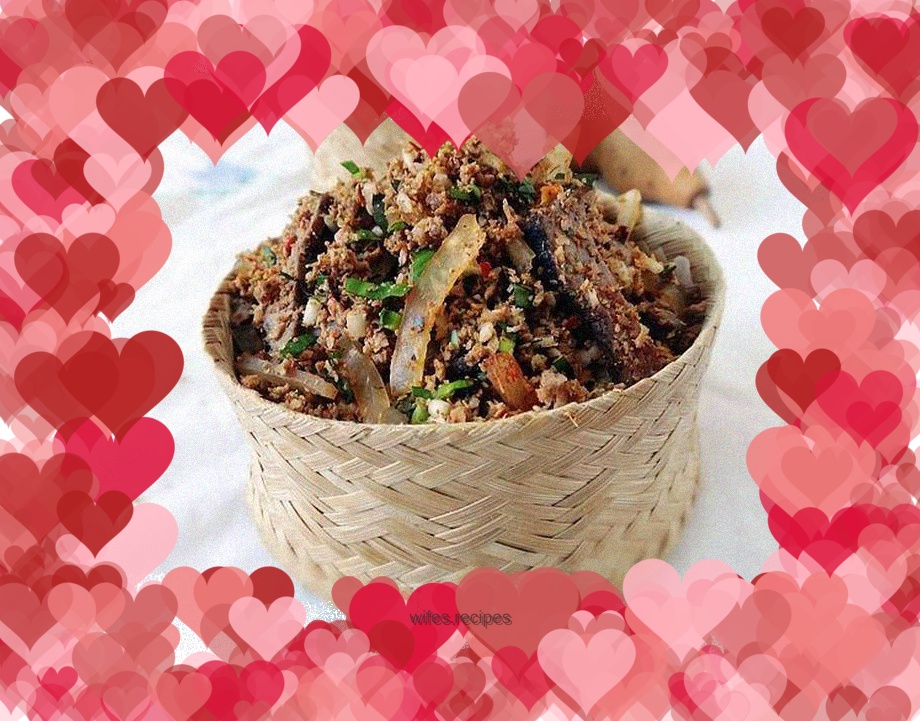
Chopped olive bark—ethnic delicacy
I have introduced various kinds of chopped lettuce to you before, so today I will introduce to you a famous Lahu people's chopped olive tree bark. You must not have thought that tree bark can also be used for cooking. This dish is a dish that every family of the Lahu people must make when they kill pigs during the New Year. If this dish is not included in any pig-killing feast, everyone will feel that something is missing, and they will not feel the taste of eating the pig-killing feast. It can be said that this is the most representative dish in the Lahu food culture. Yunnan olive trees were cut down from the mountains. After removing the branches and leaves, they used a broken bowl to scrape off the silvery white outer layer and then scrape out the thick bark inside. The scraped bark is bitter and astringent. I don’t know how the wise ancestors thought of using rice soup to remove the bitter taste of olive tree bark. Use rice soup to remove the bitterness from the olive bark, chop it finely with a knife, then add the tenderloin, roasted to medium rare, spices, etc. and chop it again. Finally, add the roasted and sliced pork liver and pig skin, then add the chili powder, salt and other seasonings that have been simmered with fire ash, mix well and serve. But this is not the most delicious. The most delicious chopped olives must contain pig blood marinated in home-roasted wine, chili, pepper, salt and other seasonings. Of course, eating chopped olives with pig blood also requires a certain amount of courage. Not everyone can accept the bright red color of raw pig blood. Although chopped olives with pig blood added taste great, with the popularization of scientific knowledge and the proliferation of various pig feeds, olives chopped with pig blood are no longer made in public places and restaurants. The chopped olives that everyone eats are the same as the one in the picture below. Although it does not look good, the taste will definitely make you forget it after eating it. Of course, there are a few adventurers who are not willing to give up the delicious taste of chopped pork blood and olives.
Hot dishes Home cooking -
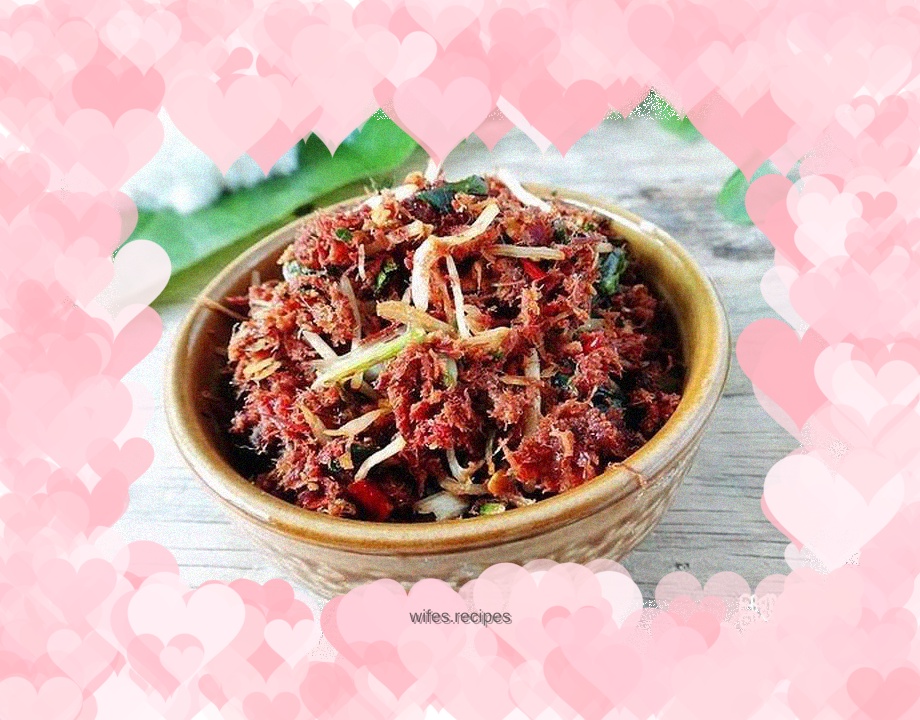
Dai-flavored beef jerky
Chung: chōng to put something in a stone mortar or mortar to pound off the skin or mash it. Niu Ganba is a unique flavor food in Yunnan. Generally, in autumn and winter, high-quality beef from the hind legs of fat beef cattle is selected, supplemented with an appropriate amount of salt, pepper and other seasonings, and processed by rubbing, pickling, sun-drying and other processes. It can be fried, boiled or roasted when eaten. The Dai people like to eat glutinous rice. They are accustomed to mincing beef ganba with various condiments and eating it with glutinous rice. Therefore, ganba is one of the three famous dishes of the Dai people. Every time when the market comes, Dai women will sell this specialty dish in the market to earn some pocket money.
Cold dishes Common dishes