Italian vegetable bread
Overview
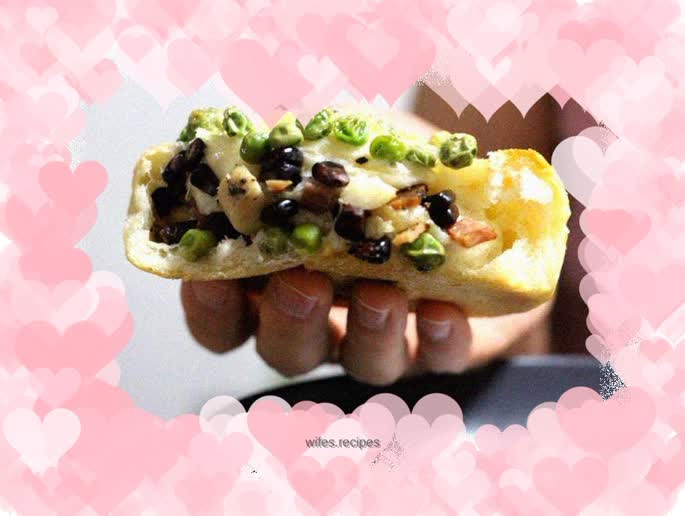
I made the Rosemary Spice Bread last week. I added rosemary to the basic Italian dough to make the Spice Bread. Based on the basic dough, there can be many variations. This week I made vegetable bread, which is to add some vegetables to the basic Italian dough. Vegetables included in the book include broccoli, broad beans, potatoes, sweet potatoes, pumpkin, bell peppers, and candied carrots. I made the dough and touched it, but found that there was none. Well, I used local materials. If I didn’t have the above ones, I just found some that I had at home. Not only did we have vegetables, but also meat. This Italian bread has no sugar, and uses olive oil instead of butter. The surface is crispy and the inside is extremely soft. The added fillings greatly enrich the taste and texture. Lao Wu loves it.
Tags
Ingredients
Steps
-
Mix all the ingredients except cheese powder, beat with a chef's machine until a smooth film appears, and ferment. This time I tested the fermentation temperature of 38°C in the book and found no over-fermentation. Before, I thought this temperature was too high. After the first round is completed, exhaust the air and let it sit for half an hour

-
While the dough is resting, prepare the vegetables. A basic principle is that all vegetables must be cooked, whether they are boiled, steamed or roasted, they must be cooked anyway. I grabbed some peas from the refrigerator, peeled them and froze them in the refrigerator. Put the peas in a bowl, add water and a little salt, microwave on high heat for 5 minutes, the peas will be cooked, no need to cook at all. I don’t tell most people this little secret. I eat leftover yams in the morning, peel them and cut them into small cubes. Boil and peel the purple corn (actually, I cooked it in the microwave) and a piece of bacon left over from the morning, cut into small cubes. Reserve a few peas for garnish, put the rest in a bowl, sprinkle with a little salt and black pepper, stir well and set aside.

-
After resting, flatten the dough and roll it into a rectangular shape with a rolling pin.

-
Spread the prepared vegetable cubes onto the dough

-
Leave about 3cm of space at one end of the dough, do not cover it completely. Beginning at the end that is not blank, roll up. If you've ever made a meat dragon, you know how to roll it.

-
The end left blank at the end should be pinched together with the roll

-
Divide the roll into 4 portions. Because there are fillings inside, it is not easy to use an electronic scale to accurately weigh each portion of dough. It seems to be about the same, so just divide it with a dough knife. I divided it into 4 parts because I used a large burger mold with a diameter of about 12cm. If an ordinary hamburger mold is about 7cm in diameter, it would be better to divide it into 6 pieces

-
Put it into the fermentation box for the second time, 38℃, about 1 hour. After fermentation is completed, the dough has fermented to the same size as the mold. Coat the surface of the dough with olive oil and sprinkle with cheese powder

-
250℃ for upper heat and 220℃ for lower heat, 15-18 minutes. Pay close attention to the coloring of the surface. However, my large oven can color well, better than the original small oven, and the heat is not as high.

-
I think this bread tastes better when eaten warm. If it cools down, bake it in the oven at 100℃ for 3-5 minutes. It will taste as good as freshly baked
