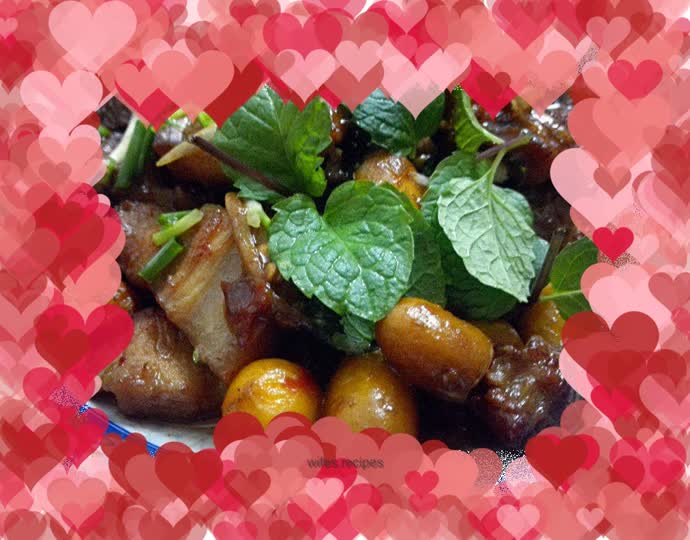
Braised pork belly with water hyacinth fruit
Overview
Phoenix eye fruit is a traditional Chinese medicine (named because it looks very similar to Phoenix eye). People in Guangdong also call it Ping Po. The fruit has the effects of harmonizing the stomach and digestion, detoxifying and killing insects. It is used for stomach upset, vomiting, abdominal pain due to worm infestation, hernia pain, and head ulcers in children. Water hyacinth fruit grows in the south and is one of the indispensable memories of Guangzhou locals' childhood. It usually matures around the Chinese Valentine's Day. It is a sacrifice for the seventh sister's birthday in Guangdong custom. Due to the decline of the custom, fewer and fewer courtyards are planting it now! Vegetable markets are even rarer. The fruit looks like chestnut when cooked, but has a soft and waxy fragrance. It is a good product for making soup, stewed duck and meat!
Tags
Ingredients
Steps
-
Pick the ripe Ping Po fruit (Eichhornia fruit)

-
Use a knife to peel off the skin one by one

-
Don’t use fruits that are too tender. Peeling about 40 fruits is enough.

-
Prepare ingredients 1 as shown in the picture: pork belly, ginger, onion, garlic, mint

-
Prepare ingredients 2 as shown in the picture: salt, sugar, fermented bean curd, bean paste, soybean paste

-
Marinate the pork belly with soy sauce and wine for 10 minutes, add oil in a pan and stir-fry until golden brown. Add water hyacinths, garlic and ginger.

-
Stir-fry the previous step over high heat for about 30 seconds, add the mixed soup of "doubanjiang + salt + fermented bean curd + sugar + soy sauce + water", pass through the noodles, and simmer over medium heat

-
Simmer for about five minutes to reduce the juice.

-
Add mint, chopped green onion and serve.

-
Try a water hyacinth fruit, it is crispy and glutinous, with a light fragrance in your mouth!
