Five-color glutinous rice
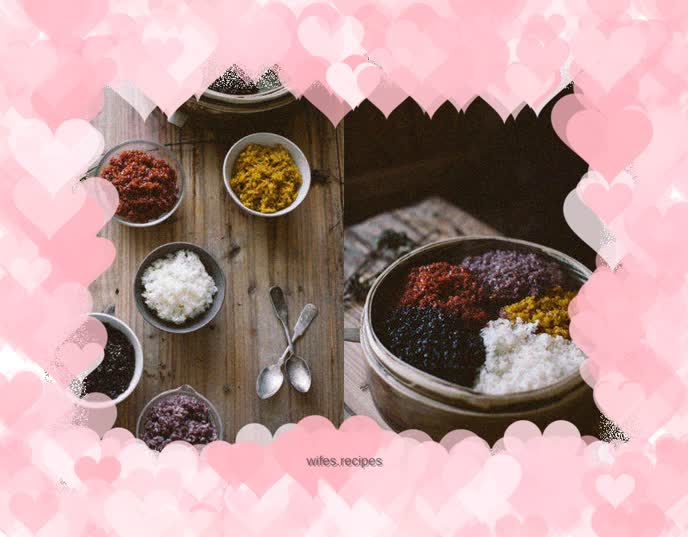
Overview
As a child of a strong family, there is one kind of food that I will definitely eat in the misty and rainy spring, and that is five-color glutinous rice. Whether it is the singing fair on March 3rd or the ancestor worship during the Qingming Festival, this colorful dish will always be indispensable on the dinner table along with our childhood memories. The five-color glutinous rice dyed with natural plants is not only beautiful and delicious, but also has certain medicinal value. Red orchid grass has a blood-producing effect. "Lushantang Leibian" of the Qing Dynasty said: "Safflower is red and juicy, and can promote blood circulation; yellow flower rice has the effect of clearing away heat and cooling blood; Li Shizhen said in "Compendium of Materia Medica" that maple leaves can relieve diarrhea and benefit sleep, strengthen muscles and strengthen qi, and long-term use can lighten the body for a long time. He also said that green rice cooked with maple leaves can strengthen muscles and bones, benefit the intestines and stomach, strengthen walking, and replenish the marrow. Renrendui www.renrendui.com Since they are so powerful, do you also want to know how these magical plants become a delicious dish? So today I will teach you how to make magical five-color sticky rice.
Tags
Ingredients
Steps
-
First you need to prepare four plants, maple leaves, yellow flowers, red orchid grass, and purple orchid grass

-
Black glutinous rice, using fresh maple leaves

-
Mash it in a mortar, dry it slightly and then immerse it in a certain amount of water

-
After soaking for a period of time, if you see that the water turns black, you can remove the leaf residue and filter it to obtain the black dye liquid

-
The black dye liquid should be boiled in a pot of Chinese water until it reaches 50 to 60 degrees, and then the glutinous rice should be immersed in it

-
Yellow glutinous rice, yellow flowers bloom once a year, so we use dried yellow flowers

-
Soak the fruits and tubers of the goldenrod plant in water and boil to get the yellow-green plant juice. After filtering out the residue and letting it cool, you can pour it into the glutinous rice and soak it

-
Red and purple glutinous rice, dye: red indigo grass (red orchid grass, purple orchid grass) is the same variety of red and indigo grass with different leaf shapes

-
The one with rounder leaves and lighter color is red orchid

-
The cooked rice is lighter in color, and the soaked rice turns bright red

-
The one with slightly longer leaves and darker color is purple orchid

-
The cooked color is thicker, and the soaked rice turns purple

-
After extracting the four juices, put different amounts of raw glutinous rice into them and soak them

-
Wait until it is evenly colored and put it in a steamer to steam for about an hour

-
You can steam glutinous rice in five colors: black, red, yellow, purple and white (the original color of glutinous rice)
