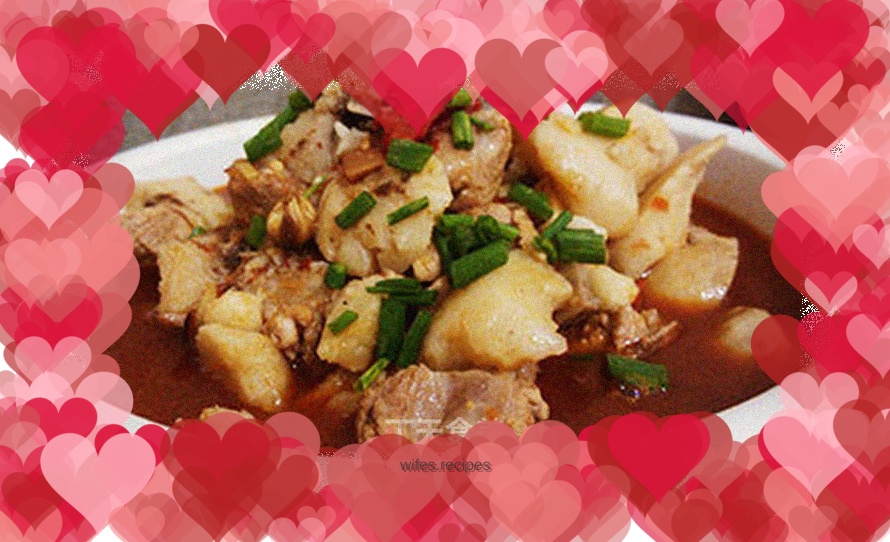
Stir-fried pork ribs with taro
Overview
Our Mr. Xiong is from Sichuan, so this dish is cooked in Sichuan style. He cooks a big pot every time, and it goes well with rice!
Tags
Ingredients
Steps
-
Pour the spareribs into a pot of cold water and blanch them until they become loose;

-
While the pork ribs are being stir-fried, you can prepare other ingredients. The larger taro can be cut into two, but the smaller ones do not need to be cut;

-
Blanch the pork ribs and rinse with running water. Wash and cut the taro;

-
chili peppers, 2 bay leaves, 2 star anise, a few cloves of garlic (you can add more), smash the ginger and mince the garlic;

-
Heat oil in a pan, reduce heat to low, add 1.5 tablespoons of red bean paste;

-
Stir-fry the lower ribs evenly, add a little soy sauce to color, add bay leaves, star anise, garlic (optional) and ginger and stir-fry until fragrant;

-
Add half a spoonful of white water and stir-fry until fragrant;

-
Add taro;

-
Stir-fry until evenly colored;

-
Add a small amount of salt. Doubanjiang is salty, so you can use less salt. The main reason is to add soup to make it more flavorful;

-
You can also add bone broth or water, but leave out the taro;

-
Cover and simmer until all the taro is mushy with a spatula, then add fresh sea pepper and stir-fry evenly;

-
No need to add chicken essence, just put it on a plate and sprinkle with chopped green onion;
