French country bread
Overview
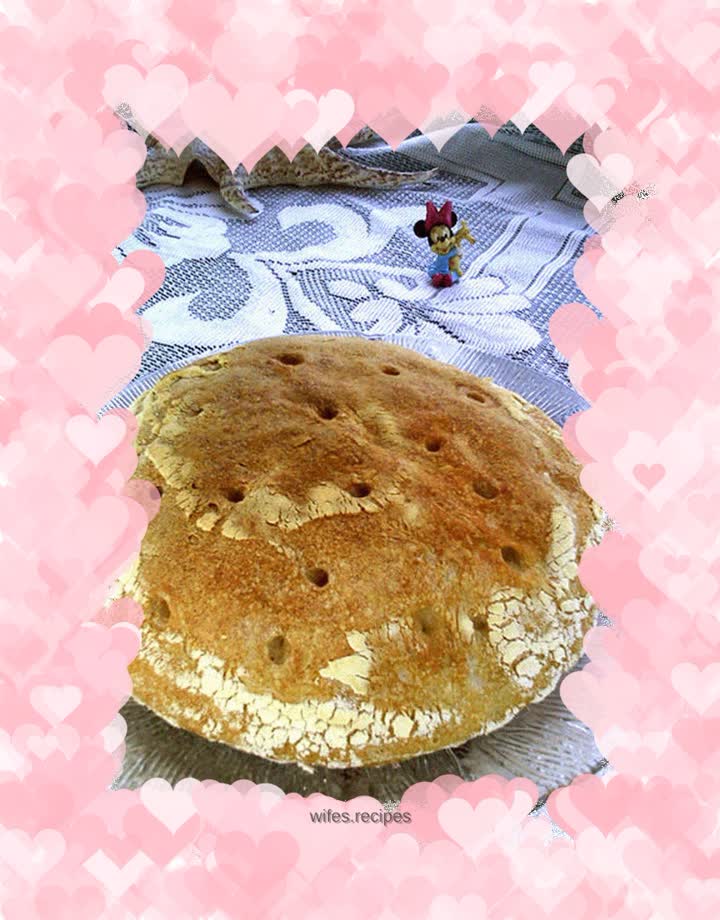
Tailor 3: French country bread The longest wait. It went through five fermentations in total. From the first fermentation of 1-3 hours; to the second fermentation of 15-20 hours; enter the main dough, ferment for 90 minutes, then ferment for 45 minutes after exhausting, and then enter the final fermentation of 70-90 minutes. The most patience-testing country bread. . . The use of rattan baskets for final fermentation seems to be a characteristic and symbol of country bread. The rattan basket gives the bread the impression of circles like steps. What to do without a rattan basket? Teacher Meng said that it can be placed directly on the baking sheet to ferment. The Japanese master said that you can find a thicker basket, lay a thick canvas, or shape the dough into a long stick shape. Regardless, they strongly recommend using a proofing basket as it's more authentic. What do you do if you don’t have a rattan basket? People who don't take the usual path always have some incredible ideas. I had already set my sights on the two empty or full earthenware jars. The size of the top of the sauerkraut jar should be just right, so let’s borrow it for now. While the sun is shining, wash it clean, dry it, and wait for the last rise of the dough. The lid with the mouth facing upward is like a large earthenware bowl, rough and simple, exuding a rustic flavor. Sprinkle flour on the side of the bowl, push the dough into it, and the whole plan is almost complete. A hundred secrets and a sparseness. Carefully pour the trembling dough onto the baking sheet, poke holes, spray with water, and place in the oven. . . However, I found that when the oven was set and the temperature was set, I forgot to turn it to the heating position. The dough that is already sprayed with water has to wait for the cold oven to brew its enthusiasm. Looking at the wet skin, I wondered if it would be too badly damaged. Not too miserable. Although there are no circles of steps, the rough texture caused by the scattered flour on the surface is enough to give people a sense of satisfaction. . . .
Tags
Ingredients
Steps
-
Fermentation 1: 100g high-gluten flour, 2g salt, 1g dry yeast, 68ml water

-
Mix the yeast ingredients

-
Stir evenly and ferment at 28-30 degrees for 1-3 hours

-
The dough has grown

-
Take 7.5 grams

-
Fermented seeds 2: 125 grams of high-gluten flour, 2.5 grams of salt, 17.5 grams of fermented seeds, 82 ml of water

-
Mix the yeast with other ingredients

-
Knead evenly. Place at 22-25 degrees and ferment for 15-20 hours

-
The dough has grown

-
Main dough: 106 grams of high-gluten flour, 19 grams of rye flour, all 2 fermented seeds, 2.5 grams of salt, 0.7 grams of dry yeast, 0.5 grams of maltose, 85 ml of water, 1/10 cup of vitamin C solution

-
Dissolve the maltose with water

-
Then pour the vitamin C solution and mix evenly

-
Cut the yeast into small pieces, pour it into the bread bucket together with the flour, and then pour in the previous mixed solution

-
Mix the dough for 13 minutes

-
into a film that can pull out holes

-
Place in a large bowl at 28-30 degrees and ferment for about 90 minutes until the dough grows

-
Pour it on the counter and press it flat

-
30% off up and down

-
Then fold it left and right

-
Return to the large bowl, 28-30 degrees, and ferment again for 45 minutes

-
The dough has grown

-
Roll into a ball and relax for 20 minutes

-
Sprinkle flour on the inner wall of the lid of the earthenware jar

-
Round the dough again, punch it down, put it into the lid, 32 degrees, and ferment for 70-90 minutes

-
The dough has grown

-
Carefully pour onto the baking cloth

-
Poke holes on the surface with chopsticks,

-
Carefully transfer to the preheated baking pan, spray water on the surface, put it in the oven, middle layer, heat up and down to 220 degrees, bake for about 25 minutes

-
Color the surface and come out of the oven.
