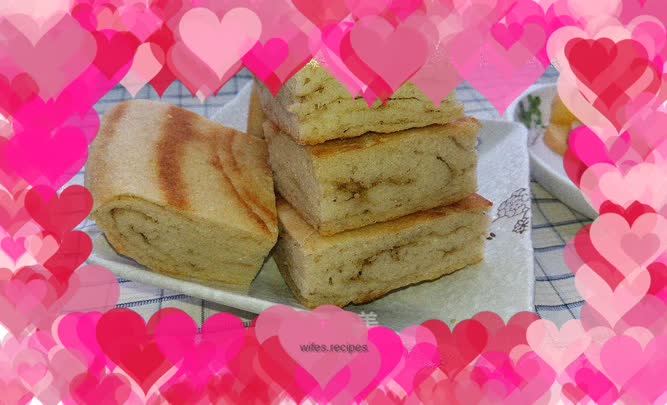
Bean dregs fermented flatbread
Overview
Soybeans are very nutritious. It would be a pity to throw away the leftover bean dregs from making tofu. What should I do? I steam steamed buns, bake small pancakes, and make flower fertilizer, how else can I eat it? I was going to try making large thick pancakes made from yeast dough, but I didn't expect it to be quite successful. Ever since my nephew took away my electric baking pan, the thick dough-baking pancakes have disappeared from our dining table. Although I can also make it in a pan or pressure cooker, I'm always afraid that I won't be able to do it well if I don't have the right skills. Recently, I have a lot of bean dregs left over from making tofu buns. It would be a pity to throw them away. I can’t finish steaming the steamed buns. Pancake making is finally on my list of recipes! One batch of bean dregs can bake two large thick cakes. This time I baked two pancakes at the same time, two flavors, one with green onion and sesame flavor, and the other with salt and pepper sesame flavor. Use a pan on one side of the fire and a pressure cooker on the other, which saves time. But you have to multitask, concentrate, and don't let your mind wander, otherwise the consequences will be serious. This time when making pancakes, I reduced the amount of oil and only lightly brushed a thin layer of oil on the pancakes. There was no need to pour more oil into the pan, and the resulting pancakes were not greasy.
Tags
Ingredients
Steps
-
There were 185 grams of bean dregs left over from making tofu. The actual bean dregs used were wetter than the ones in the picture. The picture was not taken and the previous picture was used.

-
Take 185 grams of bean dregs, add 500 grams of flour, 3 grams of yeast, 7 grams of salt, and 320 grams of warm water and mix into a dough. Don’t use the water all at once, there should be about 20 to 30 grams of water left. After the dough is mixed, dip your hands in water and roll the remaining water into the dough little by little until all the water is absorbed into the dough. Repeat the above steps of soaking in water until all the water is used up and the dough is very soft.

-
Adjust the amount of water according to the humidity of your own flour. Place the dough lid in a warm place to rise until it doubles or 2.5 times in size, then start making the cake.

-
Put a small spoonful of oil in the pot. After the oil is hot, add 40 grams of green onion leaves and stir-fry until the green onion leaves become soft. Add 1 gram of salt and mix well, let cool and set aside.

-
Divide the dough into two even pieces and roll it into a round thick dough piece, about 0.5 cm thick. Spread the green onion leaf oil just now evenly on the dough sheet, and sprinkle a little sesame powder on top.

-
Make a cut on the radius of the dough and roll it into a cone shape.

-
Take another piece of dough, roll it into a round shape, brush it with some oil, sprinkle 1 gram of salt and pepper on top, and the remaining sesame powder.

-
Rolled cone

-
Flatten it, roll both sides into a thick cake, about 1.2 cm, bake for 20 minutes (according to the local temperature, the cooking time can be appropriately extended in cold weather), and start baking.

-
To reduce the oil intake, I used a brush to lightly brush the cake with a layer of oil. There is no oil in the pan.

-
Put the cake directly into the cold pot, and turn on the natural gas stove at the lowest heat. In order to heat evenly, the pan should start to rotate in a "rice" shape, and rotate every 20 seconds. The further you go to the back, the more frequently you have to rotate. Until there is a sound of water drops falling on the lid of the pot. Lift the lid and apply a thin layer of oil on the surface of the cake. Use a spatula to turn it over along the sides. The first side will take longer to cook, so please be patient. About 8 or 9 minutes.

-
After turning it over, if one side is lightly colored like me, you can wait until the other side of the cake is baked and then bake the lighter side. Because the first side takes a long time to bake, the cake is basically mature when you turn it over. Because the pot is also hot, the second side takes a shorter time than the first side. It will take about 4 or 5 minutes. Wait until the second side is colored and you can take it out of the pan.

-
I baked the other cake in a high pressure cooker with a pressure valve. Because the bottom of the double-bottom pressure cooker is thicker, the color is more even and there is no need to turn the pot. The time is shorter than the pan. Because the rim of the pot is high, it is not easy to flip the cake. Dear friends, you can tilt the pot more so that it is easier to turn over. I seared the first side for 6 minutes. The second side is about 3 minutes long.

-
This is pan-fried green onion flatbread.

-
Tile diagram

-
This is a pressure cooker pancake cutting diagram.
