Candied Kumquats
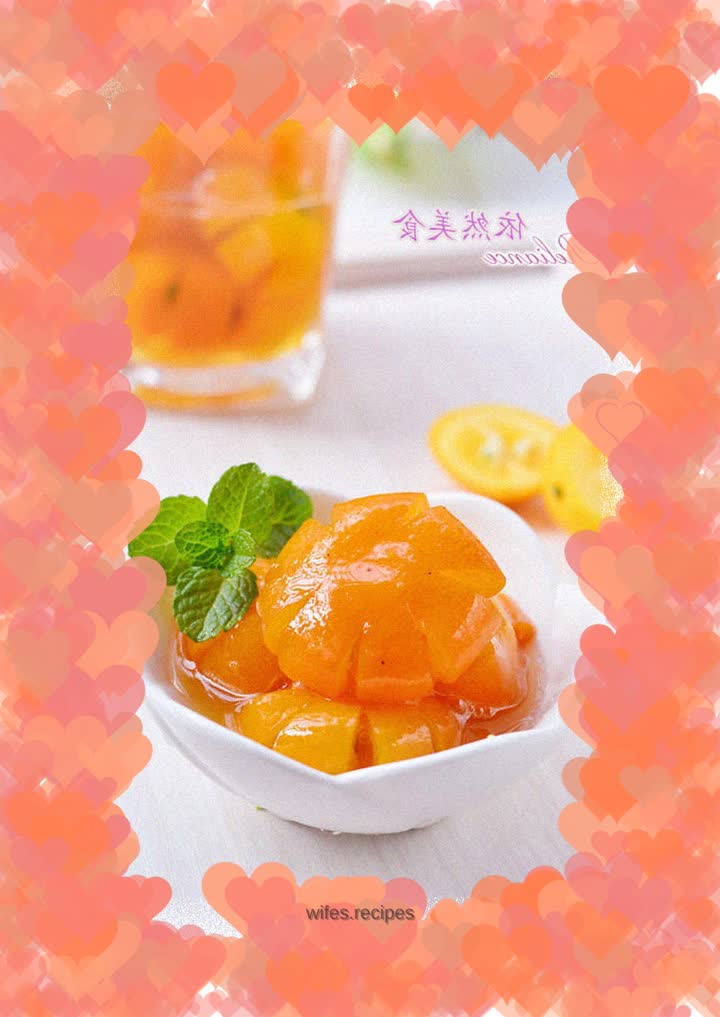
Overview
Youxi County is located in the central part of Fujian Province, where there is neither scorching heat in summer nor severe cold in winter. Due to their special climatic and soil conditions, Baziqiao Township and Guanqian Town in Youxi County have become the main producing areas for high-quality kumquats. The three connected Sanhong Villages of Hongtian Village, Hongpai Village in Baziqiao Township, and Hongcun in Guanqian Town and their adjacent Luliu Village and Jiuqu Village produce the best kumquats. These villages are one of the main kumquat producing areas in Fujian Province. Kumquats in Youxi County were first planted in Hongpai Village of Baziqiao. According to the "Youxi County Chronicle" in the 50th year of Emperor Kangxi's reign in the Qing Dynasty (1711), kumquats are called golden jujubes when they are long, and kumquats when they are round. There is also mountain kumquat, commonly known as golden bean. It can be seen that kumquats have been cultivated in Youxi for at least 270 years. The kumquat area in Youxi County reaches 36,800 acres, with an output of 21,000 tons. 14 key villages have established standardized cultivation demonstration areas of 1,000 acres and 100 acres. Youxi County has now become one of the four major kumqua producing areas in the country. Edible effects: Kumquat has a good effect on preventing blood vessel rupture, reducing capillary fragility and permeability, slowing down arteriosclerosis, and can produce two-way regulation of blood pressure. It is very beneficial for patients with hypertension, arteriosclerosis and coronary heart disease. The aroma of kumquat is pleasant, and it has the functions of promoting qi and relieving stagnation, promoting body fluid and digestion, resolving phlegm and soothing the throat, and sobering up. It is a good food therapy for those with abdominal distension, cough with excessive phlegm, polydipsia, and sore throat. Regular consumption of kumquats can also enhance the body's ability to resist colds and prevent colds. Applicable people: It can be eaten by everyone, especially middle-aged and elderly people. Kumquat is warm in nature and should not be consumed by those with symptoms such as sores on the mouth and tongue. Foods always complement each other. You should avoid drinking milk one hour before and after eating kumquats, because the protein in milk may coagulate when encountering the fruit acid in kumquats, affecting digestion and absorption, and may occasionally cause abdominal distension. It is also not advisable to eat more kumquats before meals or on an empty stomach, because the organic acids contained in them will irritate the gastric mucosa and cause discomfort in the stomach. When you have a sore throat or cough, you should not add sugar when drinking kumquat tea. Too much sugar will easily produce phlegm.
Tags
Ingredients
Steps
-
.Ingredients: 650g kumquat honey 1 tablespoon white sugar 4 tablespoons white sugar 30g

-
.Pour the kumquats into a basin, add flour, soak them for 8 minutes, then wash them thoroughly and then serve them out of the pot.

-
.Use a fruit knife to cut 6 knives separately and don’t cut them off.

-
.Put it in a bowl and press it gently with your hands to form a flower shape.

-
.Pour in sugar and marinate for one morning.

-
.Pour half a bowl of water into a milk pot, add white sugar and white sugar and cook until melted.

-
.Pour in the pickled kumquats, bring to a boil over high heat, then reduce to low heat and simmer until thickened.

-
.When it cools down, pour in the honey and stir evenly.
