How to make taro pork
Overview
The method of making braised pork with taro is an original work shared by Sister Xin and I as a real-shot editor for everyone to learn from. The group friends help each other and learn from each other with the theme of meeting at 9 o'clock every night, and the recipes of the group open class are simultaneously launched in the food world. If you encounter problems in your studies, you can ask the masters in the group for advice; if you are willing to share delicious food with your friends, you can use it to your heart's content; if you are troubled by finding no teachers, you can pay attention to the open food classes of seniors. The group is our big family. We welcome everyone to contribute and inherit the spirit of mutual help and mutual learning! Welcome to join the Love Life Love Food Q Group: 555618180
Tags
Ingredients
Steps
-
Remove the outer skin of the taro, wash it, wipe off the water and cut it with a knife. Just look at the taro you bought and cut it vertically. This is not important, but the thickness of the slices you cut should not be smaller than a woman's slender fingers, and the same goes for the thickness of the meat slices.

-
Set the cut taro cubes aside for later use. Let's cook the meat first. Put the pork belly into a pot of cold water and boil it. After boiling, there will be a lot of blood foam. Just clean it up with a spoon. Then the pork belly should be cooked until it can be easily inserted with chopsticks.

-
Pick up the cooked meat, spread the soy sauce evenly on it while it's hot, and then use the meat to insert the needle holes. Friends who know how to make Cantonese barbecue will understand this tool at a glance. Friends who don't have tools can just use chopsticks to insert the holes, and insert them evenly.

-
First, use oil-absorbing paper or newspapers to line the surroundings of the pot, then heat the oil over high heat to a temperature where the taro bubbles as soon as it is put into the pot. Fry until the surface of the taro cubes becomes hard and a little golden. At this time, the taro cubes are already cooked. You can try to see if they are pink or glutinous. If the taro cubes are watery, it means that the quality of your taro is very poor, and you can consider whether to continue making it.

-
The leftovers of taro can be cut into small cubes, fried and used as ingredients for steamed pork ribs. I will teach you how to make steamed pork ribs with taro when I have the opportunity.

-
After frying the taro cubes, it’s time to fry the pork belly. I’m always afraid of the pork skin bursting with oil, so I couldn’t do this step well, so I came up with a simple method. Turn off the heat first, put the pork belly into the pot with the skin side down, cover the lid, and then turn the heat to 5 00 degrees, setting time is 15 minutes. If there is a lot of meat, the time should be longer. After turning on the stove, people can just walk away and let it go. If your stove does not have a timer, use an electric plug-in board to connect the power to a distant place. When the time is up, unplug it.

-
pieces of Nanru, 2 teaspoons of sugar, 1 small bowl of Erqujiu, 3g of five-spice powder, appropriate amount of ginger juice, 1 teaspoon of hoisin sauce. Crush all these ingredients and mix well and set aside.

-
Then cut the fried pork belly into thick slices and add in the seasoning and mix evenly. Remember to stir gently with your hands so as not to break the meat. Mix the meat evenly and take it out. Add the taro cubes and mix evenly.

-
After mixing, use your hands to repeatedly sandwich the two taro pieces with a piece of meat, then place them into the steamed pork container, making sure they are as close as possible.

-
Then pour the water used to cook the pork into the container with the seasoning and mix evenly with the remaining seasoning juice, then carefully fill the steamed pork container from the sides.

-
Boil water over high heat until it's boiling, put it into the container and steam it, then turn it to medium heat and steam for 1 hour, then open the lid and fill the container with the remaining meat cooking water and continue to steam for 1 hour. Because it was too late on the day of the filming, the following pictures were taken after I steamed the front part for an hour. In this step, everyone must steam it for enough time before taking it out of the pot.

-
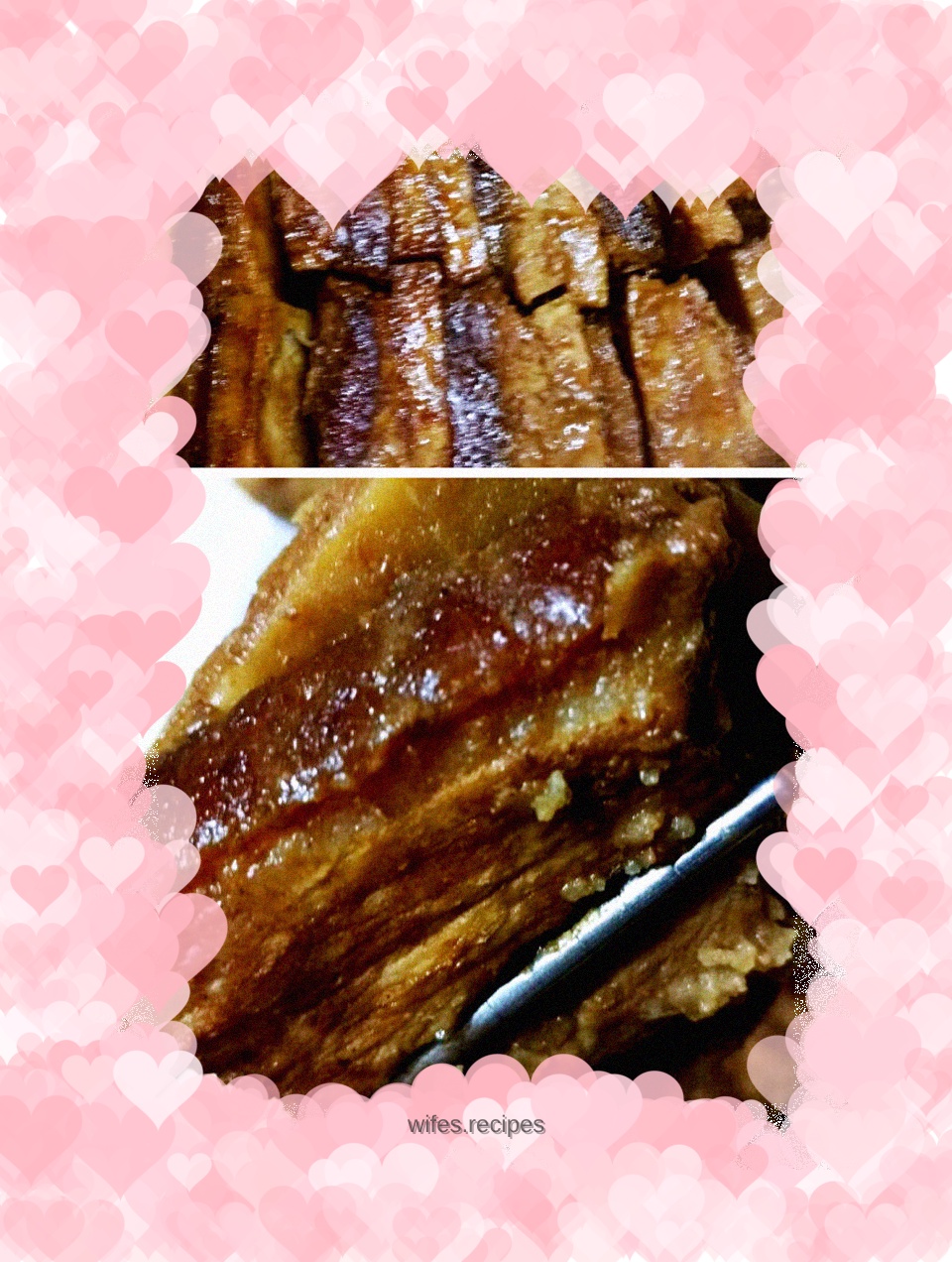
One hour after steaming for the second time, use a plate larger than the container to invert it onto the container, then press it tightly with your hands and turn it over, inverting the meat in the container into the plate. This completes the entire production process. The close-up pork meat in the picture was not steamed for enough time. I specially zoomed in for everyone to see it clearly. The pork cooking water poured in for the first time was absorbed by the pork meat and taro pieces, so the cooking water must be filled again in the next hour, so that the pork meat will be steamed with oil but not greasy, and have a tender and smooth texture that melts in the mouth.
