Low temperature original chiffon (8 inches 90 minutes)
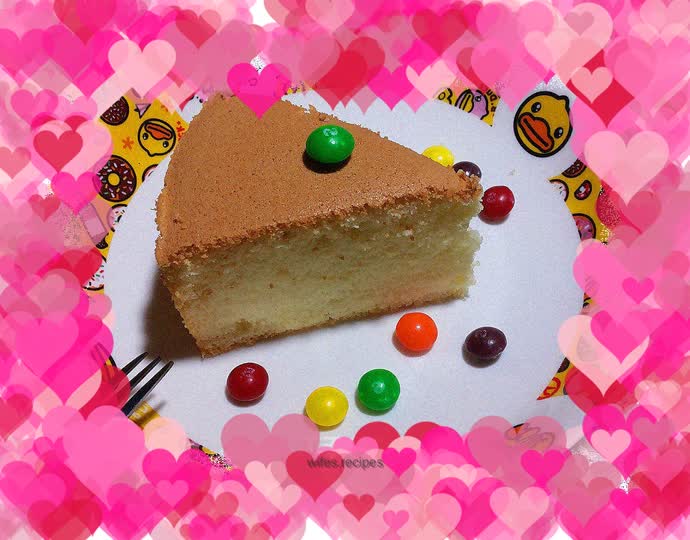
Overview
Chiffon is an eternal topic in the baking world. Success or failure involves too many factors. Only by constantly practicing and finding a recipe that suits you can you do better and better!
Tags
Ingredients
Steps
-
Prepare raw materials

-
Separate the egg whites and pour the egg yolks and egg whites into clean, dry containers; place the egg whites in the freezer of the refrigerator to freeze.

-
Pour pure milk into the container

-
Pour the salad oil into the container and mix

-
Beat with hands until completely blended and no oil spots can be seen, and there is a slight thick feeling

-
Add egg yolk

-
Use a manual egg beater to beat the egg yolk paste evenly into a thin paste. It can flow naturally and there is no heavy feeling when stirring

-
Sift in 80 grams of low-gluten flour

-
Use a hand mixer to stir the egg yolk paste and flour and then beat evenly in a clockwise direction until there are no lumps

-
The egg whites will be easier to whip after being frozen for about seven or eight minutes. Add a small spoonful of salt and fine sugar in three batches (at this time, you can preheat the oven for ten minutes, with the upper heat at 130 degrees and the lower heat at 100 degrees.)

-
Turn the electric egg beater to the maximum setting and turn it clockwise around the edge of the container at a constant speed for about fifty times. A fishnet-shaped foam will appear. Pour in the first 1/3 of the fine sugar

-
Then continue to the highest setting and beat clockwise for about a hundred times at a constant speed. Lift the head of the egg beater and observe. When the egg whites do not drip, pour in the second 1/3 of the fine sugar

-
Then continue to the highest setting and beat clockwise for about a hundred times at a constant speed. A large curved hook will appear, which is close to dry foaming. At this time, add 1/3 of the fine sugar for the third time

-
Finally, lower the egg beater to the medium setting and beat it in a circular motion at a constant speed, observing every twenty times; stop until the meringue appears with short triangular corners

-
Successful meringues have clear texture, are delicate and shiny, and are very strong

-
Fold one-third of the meringue into the egg yolk batter, and stir from bottom to top. You can turn the bowl while mixing, and the movements must be light and fast.

-
Pour the egg yolk paste back into the meringue and continue to stir. The final state will be a bit thick

-
Pour it into the cake mold and make it about 80% full, but it should not be less than 70% full. Use a rubber knife to smooth the surface and shake it lightly a few times to release any bubbles

-
Place in the oven at 120 degrees, then 100 degrees, second to last layer, 90 minutes

-
Put it in for about 20 minutes and it will start to rise to half. It must be fluffy slowly to avoid cracking

-
Let it rise until it is full in about forty minutes

-
It starts to slow down after 70 to 80 minutes, and the cake begins to exude a very rich aroma

-
It takes 90 minutes to take out the oven. When it comes out of the oven, pat the cake with your hands. There will be a popping sound and it feels hard to the touch. After it comes out of the oven, you have to bang it a few times, then turn it upside down and let it cool immediately

-
Bake at low temperature, the skin will not be thick and easy to release from the mold

-
Here’s a frontal photo

-
Side

-
Bottom, the color will not be dark

-
Side

-
Finished product pictures

-
Finished product pictures

-
At noon the next day, take a photo of the internal tissue when the sun is shining. This kind of low-temperature baking has a moister texture. This is the best chiffon I have made after trying many recipes and practicing it many times
