【Brie Bread】
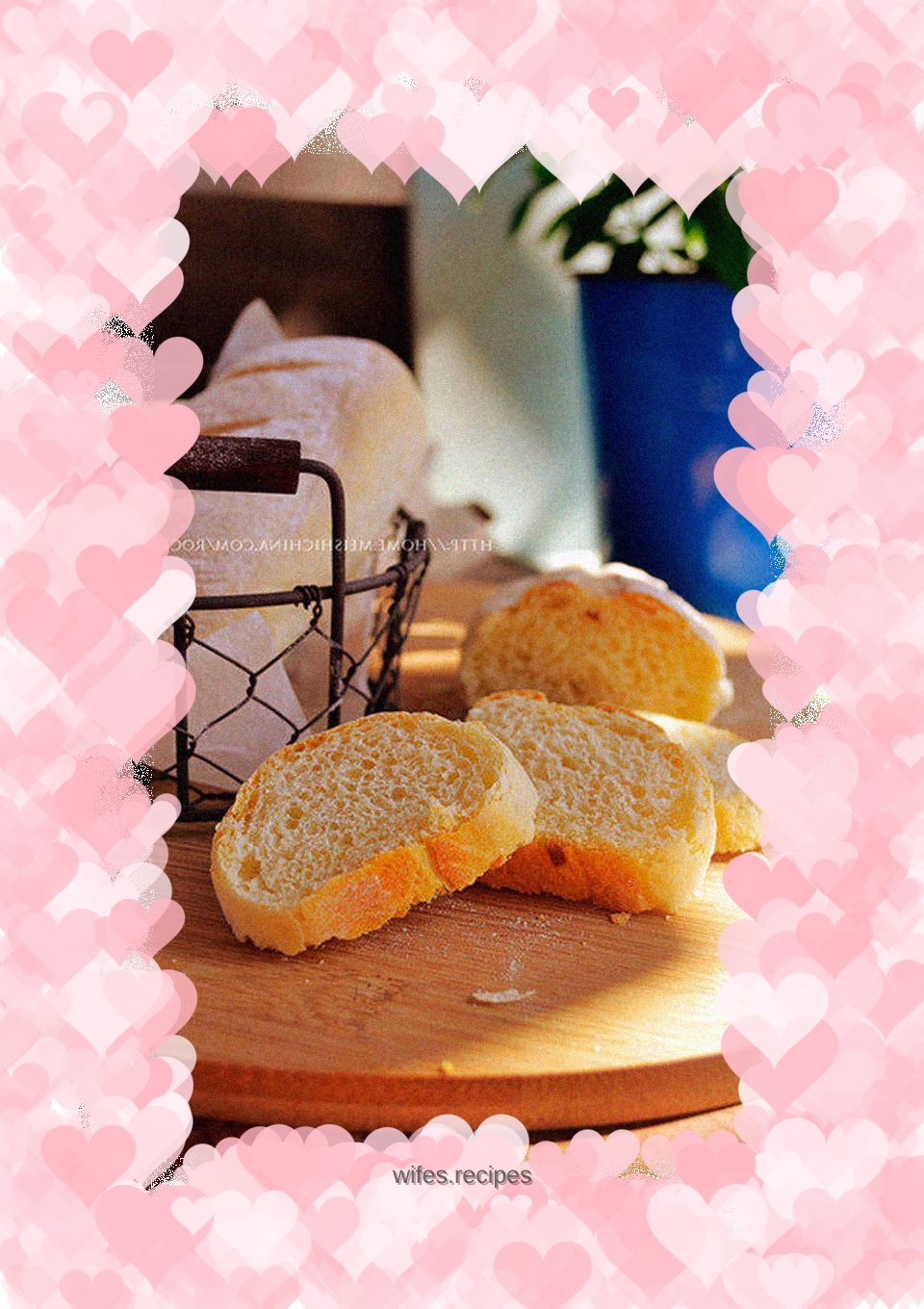
Overview
It’s because I’m very unfamiliar with French and European bread (I don’t seem to be very good at Asian bread). It’s difficult to make it for the first time, and there are big problems in control. The knife edges are also quite uneven when baking, which leads to the fact that some of the knife edges are not cracked after the finished product comes out of the oven. The appearance of the bread is really unsatisfactory. I originally felt that the French and European bread looked unflattering from the inside to the outside. This made my confidence plummet instantly. Fortunately, I was not disappointed when I tried it. The bread was perfectly browned, crispy on the outside and soft on the inside. I was able to change my misunderstanding about it. ---------------------------------------------------------------------- PainBrie is a bread from the Normandy region of France. It is a traditional food that sailors bring on board ships. Because it is relatively durable, even if the bread dries, it has a crispy and soft texture. It is a good food for long journeys. French bread is different from Asian bread. It is not as soft and delicate as the toast we usually eat. It is crispy on the outside and moist and chewy on the inside. It has a rich texture and is very suitable for making French toast
Tags
Ingredients
Steps
-
After using the oil method, put the ingredients except butter into the mixing barrel and start the dough process for 15-20 minutes, kneading to the expansion stage

-
Add the softened butter (Pictures 1 and 2 are in the wrong order, they should be reversed, I didn’t see it until I posted it, so I’ll explain it here) and continue the kneading process for 15-20 minutes until the dough can pull out an unbreakable film

-
Take out the plastic wrap and let it rise for 30 minutes

-
Divide into four equal parts, deflate and roll into balls, let rest for 20 minutes

-
With the mouth facing downwards, use a rolling pin to roll it into a shape of ox tongue

-
Then fold it in half up and down in the middle

-
Flatten it with your hands (you can also use a rolling pin to roll it out a little)

-
Then slowly roll up the dough from top to bottom and shape it into an olive shape with slightly pointed ends

-
Sprinkle a little flour on the oilcloth or oil paper, put the shaped dough in, separate the oil paper or oil paper in the middle of each dough, place it at about 30 degrees, and ferment at about 70-80 degrees for 30 minutes

-
When the dough has fermented until it has doubled in size, place it into a baking pan. Evenly sift a thin layer of flour on the dough, not too thick, and then use a knife to cut out the lines (note that it is better to cut a thin slit, but not too deep to avoid swelling and deformation during baking)

-
Preheat the oven to 180 degrees. Place a baking pan on the lower shelf of the oven. After preheating, pour 2CM of hot water into the baking pan to create steam. Place the baking pan with the dough on the middle shelf and bake for 20 minutes

-
Take out the slices and eat. If left to cool for a long time, the outer skin will be hard and crispy. You can bake it in the oven for a while and it will still be the same (it can also be made into French toast or spread with jam and eaten directly)
