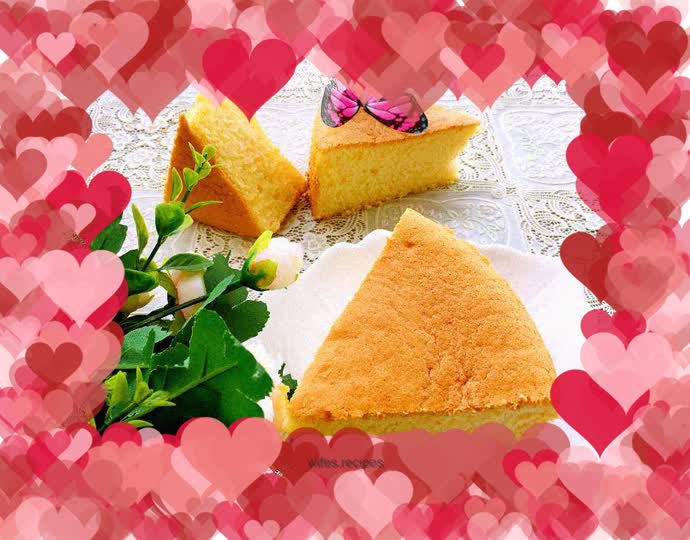
Eight-inch duck egg chiffon cake
Overview
There are some people in life who cannot eat eggs due to physical reasons. And cakes are made with eggs. Even my mother can’t eat eggs, so I thought of making a duck egg chiffon cake for her. At first, I didn’t dare to try, for fear of failure and fear of being fishy. Unexpectedly, the result was no worse than an egg. It didn't crack or collapse and was very soft. Friends who like it can try it.
Tags
Ingredients
Steps
-
Prepare materials

-
Separate the egg whites and yolks and place them in an oil-free and water-free container

-
35g of milk (can be replaced with water) 30g of corn oil, 20g of sugar, 0.5g of salt, and two drops of vanilla extract. Add these ingredients one by one into the egg yolks and stir evenly with a spatula until completely dissolved.

-
Pour in the sifted flour and cornstarch

-
Stir evenly until there are no lumps and set aside

-
Pour an appropriate amount of white vinegar into the egg whites

-
Beat the egg with an electric mixer until it becomes foamy and add one-third of the sugar

-
Accelerate the egg beater to level 3 and quickly draw large circles on the inside of the basin while beating. Gradually add the remaining sugar in two batches and beat until the egg whites become stiff and can form short, upright peaks. Preheat the oven to 150 degrees

-
Pour one-third of the egg whites into the egg yolks and stir until even. Add the rest in two batches and stir until smooth and thick

-
Pour it into the mold and shake it a few times to knock out the big air bubbles inside. Use a toothpick to pop the bubbles. Then use a spatula to smooth the surface.

-
Place in the oven at 150 degrees for 35 minutes. The specific temperature depends on your own oven

-
No cracking! After baking, take it out and knock it vertically a few times to release the air.

-
On the Internet upside down. Demold after cooling

-
Use a knife to scrape along the inside of the mold to facilitate release.

-
It looks great if you cut it open

-
Tear off another piece

-
Finished product
