Laba porridge
Overview
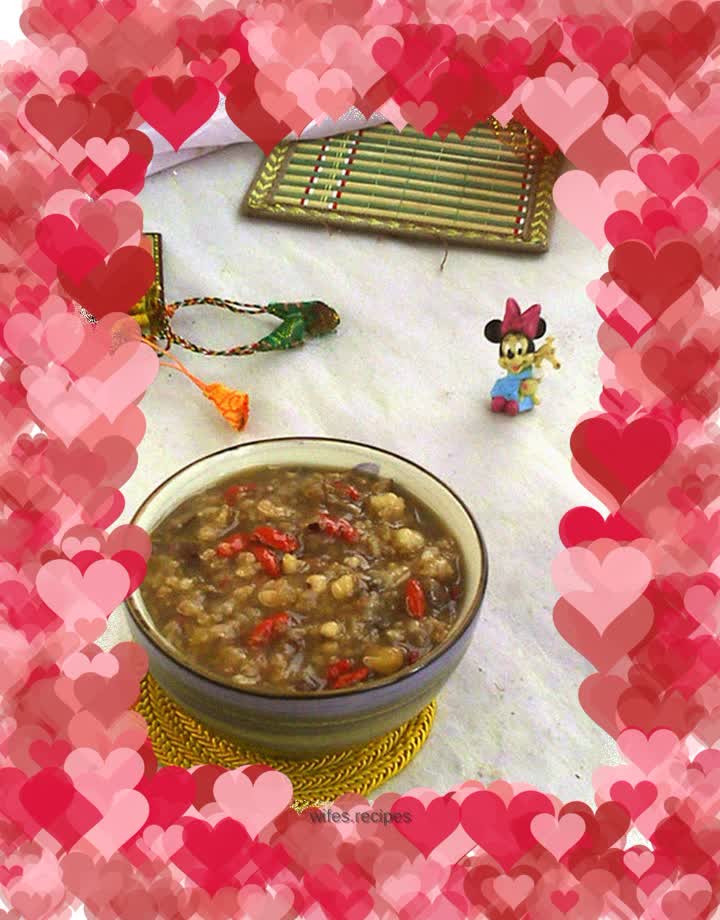
Laba porridge is also called five-flavor porridge, seven-treasure porridge, and eight-treasure porridge. According to legend, this porridge is related to the Buddha Sakyamuni, so it is also called Buddha porridge. It is said that Gautama Buddha visited all the mountains and rivers in India and collapsed from hunger, thirst and fatigue. Fortunately, he met a shepherdess who fed him wild fruits and grains, which made him feel refreshed. He meditated under the bodhi tree and finally attained enlightenment and became a Buddha on December 8. His followers designated this day as the Enlightenment Day, and imitated the shepherdess in making porridge to commemorate it, which was called Laba porridge. The custom of eating Laba porridge in China started after the Eastern Han Dynasty and after Buddhism was introduced to China. It was passed down to the Qing Dynasty that cooking Laba porridge in Yonghe Temple became a grand ceremony and the scene was extremely spectacular. The pot used to cook porridge in Yonghe Temple has a diameter of 2 meters and a depth of 1.5 meters, and can hold 20-30 loads of rice (each load is 60 kilograms). Laba porridge is cooked by more than 10 strong and specially trained cooks. On the morning of the seventh day of the lunar month, the order was given to light the fire and the ingredients were ordered. There were people standing on the three floors around the porridge pot. The three innermost floors are occupied by cooks who make porridge, lamas who chant sutras, and monks who hold sutras. Yu is the eunuch delivering porridge. The porridge is cooked entirely with firewood, and a total of 6 pots are made. The first pot was sent to the Imperial Ancestral Temple, Shouhuang Hall and temples and halls in the Qing Palace and Xiyuan to worship ancestors, gods and Buddhas. The second pot was sent to the emperor and empress, and was given to the concubines, princes, and grandsons. The third pot was given to the prince and temple monks in Kyoto. The fourth pot is given to the civil and military officials and local ministers in Beijing. The fifth pot is a lama holding sutras to Yonghe Lama Temple. The sixth pot was distributed to the common people. The emperor ate porridge very religiously. First, offer the porridge in front of the Buddha with your own hands, hold incense and kneel before worshiping. Only after the incense is gone, can you take it back and eat it. It is said that if you eat the porridge used by the gods and Buddhas, you will be blessed by the gods and Buddhas and have peace all year round. Emperor Daoguang wrote a poem called "Laba Porridge": In the early summer of Yiyang, in Dalu, millet is cooked into porridge and beans. On the occasion of the festival, I offer the Buddha's arrow with my heart in mind, and silently gaze at the golden light to help everyone. The fragrant fragrance floats gently, and the piles of fruits and vegetables gather together. Let’s taste the best products together and reach the wonderful door, and the color of the wonderful door will be passed down from generation to generation. The children celebrated the peace with a full belly and beat drums on the street. However. . . Isn’t the porridge cold now? There is no way to know the ingredients of the porridge that the Buddha ate back then. There are many recipes for Laba porridge, but this one is very common. Even so, there are no water chestnuts or green and red silk found in the house. This porridge must have come from Jiangnan? Fortunately, Laba porridge has many ingredients, so you don’t have to stick to it. Replace the water chestnuts with barley and use wolfberry for green and red ones. The function of these two is nothing more than to add color and increase the appreciation of the porridge. I hesitantly reduced the amount of brown sugar, but then I was thankful that I had to omit the white sugar. If the original recipe was enough, the sweetness would not be what I was willing to tolerate. I’ll just make the original porridge from now on.
Tags
Ingredients
Steps
-
Materials

-
Wash and drain the rice and beans

-
Remove the core and cut the red dates into small cubes

-
Chopped walnut kernels

-
Peel chestnuts and cut into small cubes

-
Pour all the ingredients into the inner pot of the electric stew pot, except wolfberry, sugared osmanthus, sugared rose, and brown sugar,

-
Add water until full

-
Put into the electric stew pot, set to low temperature, and simmer overnight

-
Get up in the morning, mash the rice, add wolfberry, sugared osmanthus, sugared rose, and brown sugar

-
Stir evenly and simmer for another 15-30 minutes

-
Serve out and eat
