Parent-child rice (Japanese name: parent-child donburi)
Overview
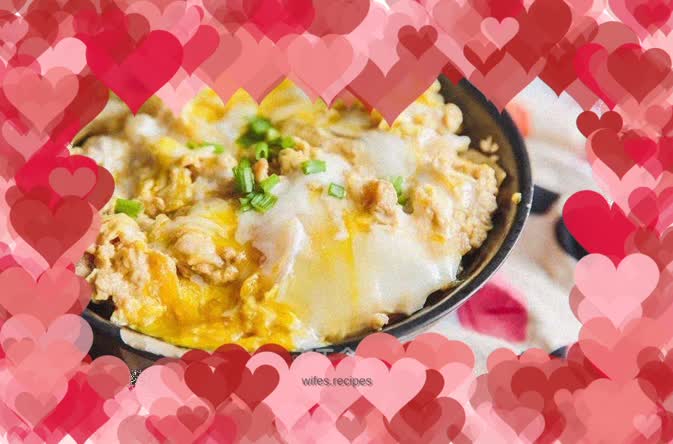
When I traveled to Japan a while ago, I ate a lot of sashimi, sushi, and seafood donburi...but one meal that made me feel warm was the parent-child meal. The first time I ate it was in a small shop. It was raining outside and the air was moist and fresh. The eggs, chicken, and rice are warm and tender, swirling softly in your mouth. No matter how heavy the rain is outside, the food inside will be so delicious...
Tags
Ingredients
Steps
-
Wash the chicken legs and cut around the ankle with scissors. The chicken skin, chicken, and fascia must be cut off, and the two parts of skin and meat must be completely separated to expose the bones. (Because chicken leg meat is tender and smooth, delicious parent-child rice only uses chicken leg meat. In Japan, there is more emphasis on using the famous "free range chicken", that is, free-range chicken breeds.)

-
Then cut vertically upward to the top, and finally cut off the fascia surrounding the bones, and the bones can be easily removed.

-
Wash and shred the onions; make a sauce with 2 tablespoons of Japanese soy sauce, 1 tablespoon of mirin, 2 tablespoons of sake, four tablespoons of water and a pinch of sugar. Set aside. (If you don’t have Japanese soy sauce, use light soy sauce (reduced to 1 tablespoon). If you don’t have mirin, you can omit it (but the sugar needs to be increased to 1 teaspoon, about 5g). If you don’t have sake, you can use cooking wine. Japanese soy sauce, mirin, and sake can be purchased online. These three things are used in many Japanese meals. The taste will be more authentic. If you like it, you can always keep it.)

-
Heat the pot over medium heat without adding any oil, then add the boneless chicken and dry-fry the chicken skin side down

-
Fry the oil out of the chicken skin (in addition to forcing out the oil, the caramel aroma of the chicken after frying will also become one of the highlights later.)

-
Remove until the edges of the chicken skin are slightly brown. (The purpose is not to fry the chicken, the chicken is still half-rare at this time.)

-
Cut into small pieces and set aside.

-
Pour the prepared juice into the pot, bring to a boil over low heat, then add the chicken pieces and onions, keep the heat low until the chicken is cooked. (High heat will quickly dry up the juice, and we need to use low heat to allow the ingredients to absorb the flavor

-
Crack 2 eggs in a bowl, use chopsticks to break up the yolks, and stir them briefly, but don't break them up completely. (In parent-child rice, the different textures of egg yolk and egg white in the mouth are very important.)

-
First, pour in 2/3 of the egg liquid in a circular motion, stir it slightly with chopsticks, and let the egg liquid, chicken and onions blend together.

-
seconds after pouring the egg liquid for the first time, pour in the remaining egg liquid.

-
After 10 seconds, turn off the heat, cover it with the cooked rice, and garnish with chopped green onions or chopped seaweed. (Because the best heat for parent-child rice should be half-cooked eggs, eggs that can be eaten raw must be used here (you can buy them online). In addition, the eggs must be fresh. The taste of stale or not good enough eggs can easily be tasted.)

-
The fried chicken has a caramel aroma, and the half-boiled egg liquid is cooked at just the right temperature. It tastes salty and sweet, and sweet and fresh. It is incomparable when paired with rice.
