Salt and pepper chive rolls
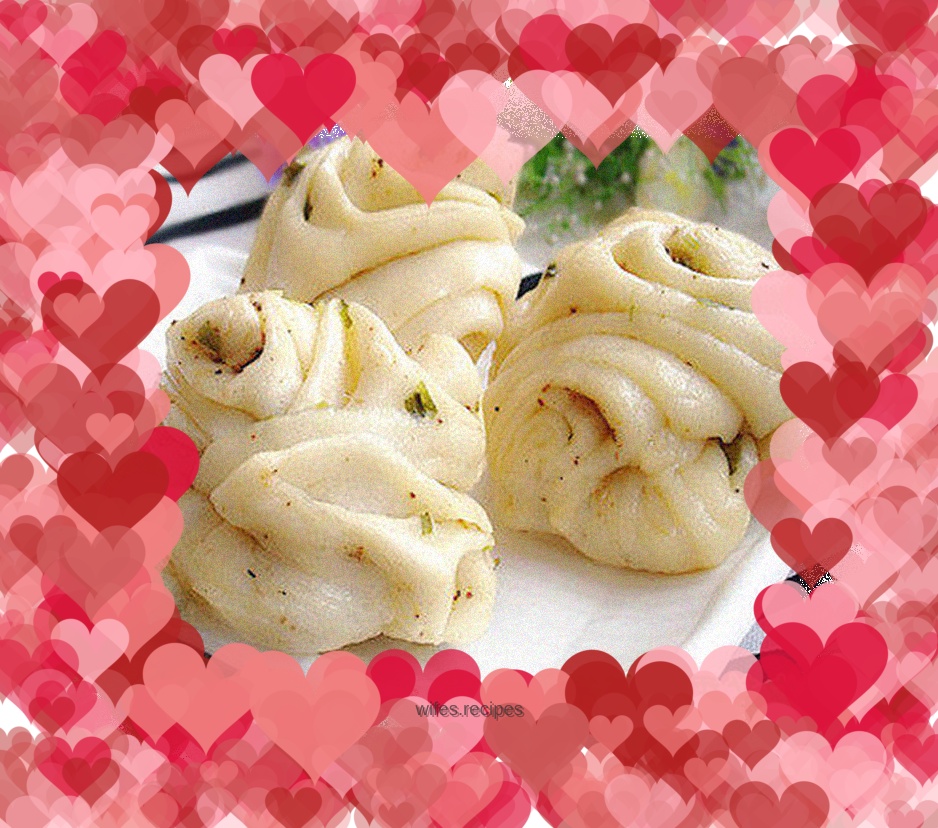
Overview
Ever since I made old noodle steamed buns a few days ago, I have basically never used yeast when making dough-based foods. I like to make my own pasta, but after all, I am from the south, and here we are accustomed to buying ready-made noodles from outside. We rarely steam them at home, which is too troublesome, so I just try to make them myself and have no experience. One thing I'm very sorry about is that I confused baking soda and alkaline noodles, thinking they were the same. Please forgive me if I misled you on this point. A friend also gave me some corrections on my method of making noodles, so thank you! In fact, both baking soda and alkaline noodles have the effect of neutralizing acid, and baking soda can also help the dough ferment. In comparison, I still prefer to use baking soda. In traditional leavened dough, alkali noodles are added during the second proofing to neutralize the acidity of the dough. However, I feel that if the amount of alkali is not well controlled or the alkali noodles are not kneaded evenly, the steamed buns will turn yellow and have a strong alkali smell. I am used to adding baking soda when making old noodles with water. The amount of baking soda is generally so that there is no sour smell, and then adding flour to knead the dough to ferment. During the second proofing, I don’t add anything, just venting and shaping. The steamed buns do not smell sour at all, do not turn yellow, and are very soft. I feel that making noodles does not necessarily have to follow the old-fashioned method. We can find a method that suits us. It does not have to be one way or the other, as long as the steamed food can meet our ideals.
Tags
Ingredients
Steps
-
Prepare the required ingredients.

-
Add chopped chives, an appropriate amount of salt, and an appropriate amount of corn oil into a small bowl and mix well. Prepare a little pepper powder.

-
Add a little baking soda to the old noodles.

-
Dissolve with a little warm water and stir well.

-
After adding flour, knead repeatedly to form a smooth dough.

-
Cover and let rise in a warm place until doubled in size.

-
Take out the risen dough, flatten it, deflate it, knead it again and divide it into two parts. (Divided into two parts for easy rolling)

-
Take a portion of the dough and roll it out into a large square piece, evenly apply scallion oil, and then sprinkle with a little pepper powder.

-
Roll up and cut into sections about 3cm wide.

-
Take two noodles and overlap them, then press them down with chopsticks in the middle.

-
Pinch the two ends of the pressed noodle and stretch it slightly, twist it into an S-shape, and then pinch the joints at both ends together. (I twisted it randomly, without any rules)

-
Place corn leaves in the steamer to prevent sticking, and put the prepared Hanaki dough into the steamer for a second time to rise (it took me an hour to rise). When it has risen to 1.5 times in size, steam on low heat, then turn to high heat and steam for 15 minutes, then turn off the heat. Steam for another 3 minutes before opening the lid and taking it out.
