Bowls full of Hakka Poon Choi
Overview
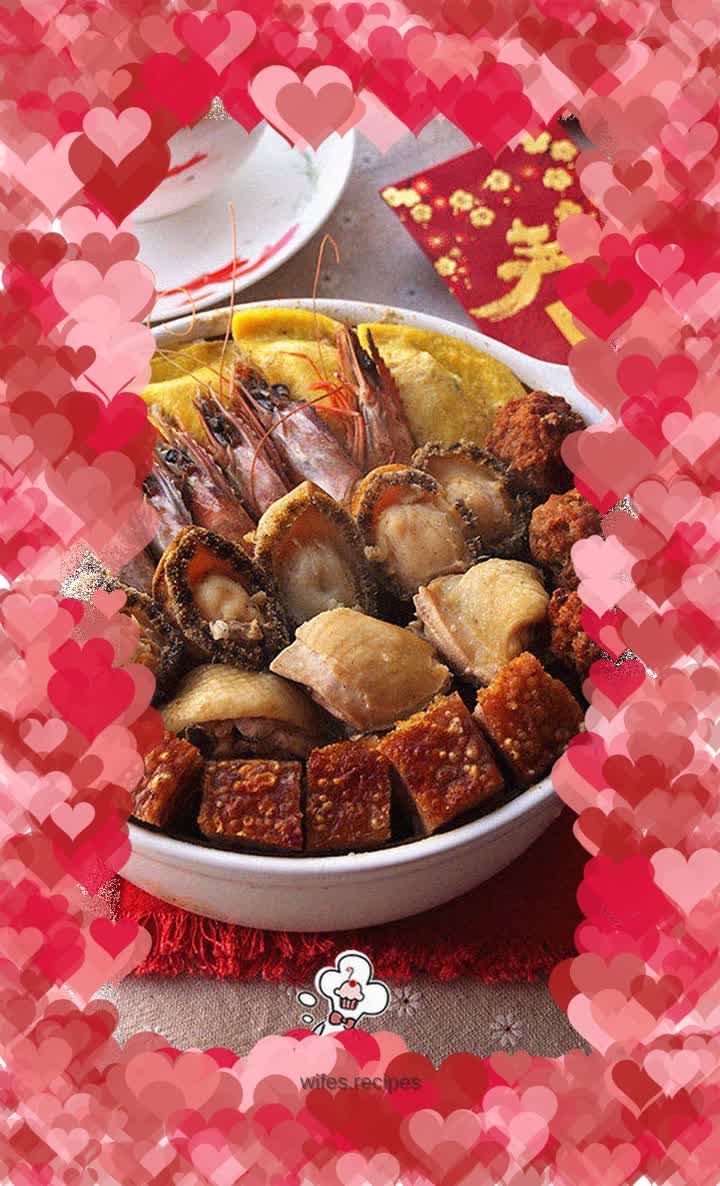
The origin of [Hakka Poon Choi] is one of the traditional dishes of the Hakka people. It means a dish that symbolizes [wealth], [harvest], and [joy]. The main thing is to use a large wooden basin to stack the vegetables layer by layer in the big basin. The bottom of the basin is placed with some vegetables that can easily absorb the soup; eat them layer by layer, and everyone gathers around to enjoy this fragrant and original traditional dish. Poon Choi originated from the coastal areas of Guangdong and originated in the late Southern Song Dynasty. With a history of more than hundreds of years, Hakka people usually eat it during festive festivals, new homes, ancestral hall lighting and New Year celebrations. When a Poon Choi banquet is held in the village, all the people in the village will be invited to eat Poon Choi together. Due to the wide range of preparation methods and the complexity of the preparation process, modern Poon Choi has been simplified and made with some simple seasonal ingredients. There are two ways to make Poon Choi. One is to cook all the ingredients and put them directly into a large pot and eat them directly. The second method is to put some raw ingredients and some cooked ingredients into a pot together, add broth, and then heat it up and eat it like hot pot. In my hometown, overseas Chinese are the second largest ethnic group, so they still attach great importance to celebrating the Lunar New Year. In the past, my grandma would be very busy during the upcoming New Year, busy doing New Year's goods and cleaning the house. Even in my generation, every family is busy preparing New Year's goods and preparing gifts for relatives and friends in preparation for the Lunar New Year. So there are still a lot of things to do during the Lunar New Year. Every year during the Chinese New Year, our family is vegetarian, so the meals we prepare are very simple. The main thing is that there will be more dishes for the reunion dinner, and I will do it myself, and Poon Choi is one of them. In this festive holiday, families are happiest when they get together and have fun.
Tags
Ingredients
Steps
-
Blanch the keel bones, put them into a soup pot, add an appropriate amount of water, add the winter bamboo shoots and bring to a boil over high heat, then reduce the heat and simmer for 2 hours.

-
Clean the live abalone you bought. I asked the market to do it. When you come back, just brush the black impurities around the abalone with a toothbrush. Then blanch it in boiling water and take it out in about 10 seconds; remember not to blanch it for too long because it will have to be cooked in a casserole for a while, otherwise the meat will become old if it is blanched for too long. This step is mainly to clean the mucus on the surface of the abalone.

-
The chicken is also blanched in the pot and then taken out and set aside.

-
First put a layer of corn on the bottom of the casserole.

-
After the corn is laid out, put the radish pieces on top, and put louver knots on the side to surround the radish; this way the louver knots will absorb the soup when it is cooked.

-
After all the vegetables are put in, the egg dumplings are placed, also around the edge.

-
Place homemade fried meatballs on the lower left side of the egg dumplings.

-
Put tiger prawns in the middle of the egg dumplings. Regular shrimps can also be used but larger ones are required.

-
Place roasted meat on the right side of the casserole.

-
Finally, add the chicken and abalone.

-
At this time, the stock is ready. There is no need to add salt because the pot will be very fresh after it is cooked.

-
Add the stock to the Poon Choi until it is eighty full; if the stock is too full it will overflow when cooked.

-
Bring to a boil, then turn to low heat and simmer until the meat is cooked through.

-
Another method is to use an induction cooker to heat it while eating, just like eating hot pot; but you must choose a pot suitable for induction cookers. In fact, casseroles are also very heat-resistant.
