【Kelp-Knot Roasted Pork】--the most cold delicacy in winter
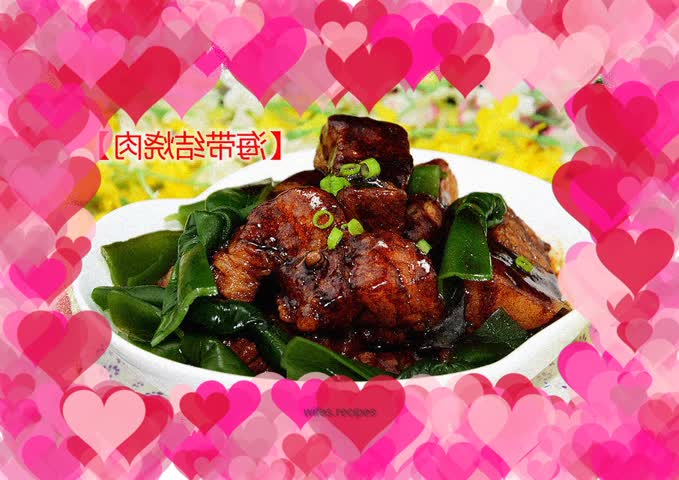
Overview
As we all know, kelp is very rich in nutrients and contains iodine, iron, calcium, mannitol, carotene and other ingredients needed by the human body. In the cold winter, kelp also has the effect of keeping out the cold. From the perspective of traditional Chinese medicine, sea water is cold and cool, and the kelp that grows here has strong cold resistance. Kelp is salty in nature and taste, and long-term consumption can also warm and nourish kidney qi. Therefore, eating kelp in winter can increase the body's ability to resist cold. In addition, people's fear of cold is related to the body's lower intake of certain minerals. For example, the amount of calcium in the human body can directly affect the elasticity and excitability of the myocardium, blood vessels and muscles; iron deficiency in the blood often manifests as low heat production and low body temperature. Therefore, supplementing foods rich in calcium and iron can improve the body's ability to resist cold. Kelp is a treasure house for humans to absorb calcium and iron. Each 100 grams of kelp contains up to 1177 mg of calcium and 150 mg of iron. Therefore, eating kelp in winter has important health care effects on children, women and the elderly. Stewing pork and kelp together can maintain nutritional balance. The kelp polysaccharide in kelp can reduce blood cholesterol and triglycerides, prevent the formation and development of atherosclerotic plaques in the arterial blood vessels, and has anticoagulant effects. Therefore, this kelp-crusted pork dish is very suitable for eating in the cold winter. After eating this dish, your winter will really no longer be cold!
Tags
Ingredients
Steps
-
Ingredients: 250 grams of salted kelp knots, 500 grams of pork belly Ingredients: appropriate amounts of onions, ginger, garlic, and dried red pepper Seasonings: appropriate amount of peanut oil, 10 peppercorns, 1 aniseed, 5 pieces of rock sugar, 2 tablespoons of fish stuffed soy sauce, 5 tablespoons of braised soy sauce, 3 tablespoons of salt, 3 tablespoons of cooking wine

-
After washing the salted kelp knots, soak them in water for 4-5 hours and set aside

-
Cut the pork belly into mahjong-sized pieces and set aside. Boil water in a pot and blanch the pork belly in cold water

-
After the pork belly is blanched, take it out and rinse away any foam on the surface

-
Add an appropriate amount of peanut oil to a micro-pressure cooker, stir-fry onions, ginger, garlic, dried red pepper, Sichuan peppercorns, and aniseed. After the seasonings are fragrant, pour the blanched pork belly pieces into the pot and stir-fry over high heat;

-
After frying for a while, add 5 pieces of rock sugar, 2 tablespoons of fish stuffed soy sauce, and 5 tablespoons of braised soy sauce and continue to stir-fry

-
When the skin of the pork belly pieces is browned, pour in boiling water until the water covers the pork belly pieces

-
Cover the lid of the micro-pressure cooker, adjust the setting to pressure, turn to medium heat and press for 20 minutes

-
After 20 minutes, open the lid of the pot, put the kelp knots into the pot and simmer over medium heat for another 20 minutes. Then add 3 tsp of salt and 3 tbsp of cooking wine to taste

-
When the stew soup becomes thick, turn to high heat and reduce the juice
