Super smooth and tender clam stewed eggs
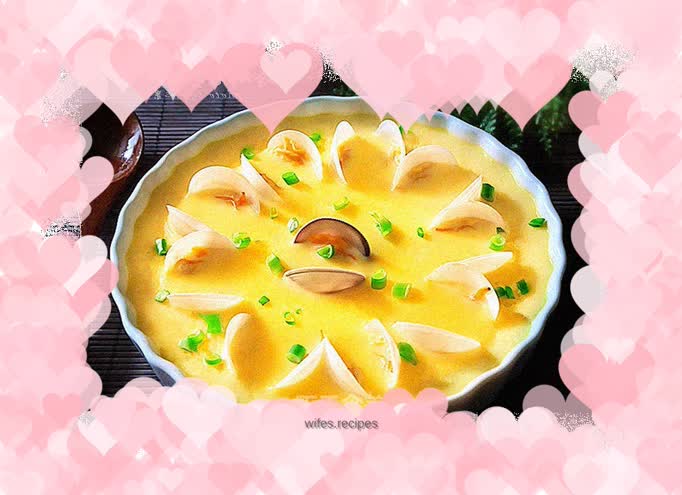
Overview
Clam stewed eggs are delicious and easy to make, but for some people, the smoothness and lack of honeycomb pores on the surface has always been a headache. In fact, if you understand why honeycomb pores are formed, you can easily solve them. The mixing of stewed eggs and egg liquid, the proportion of water, the steaming method and the time are all directly related. By following the steps below, you can easily solve the problem of stewed eggs.
Tags
Ingredients
Steps
-
Spit out the sand and clean the clams first, then put shredded ginger in the pot and boil water, put in the clams and cook until the shells open, then turn off the heat and take them out, then put them in the water to wash them clean. Do not pour away the water in which the clams were cooked. Take out the layer of water foam floating on them and skim them aside for later use

-
Determine the number of eggs according to the size of the egg stew plate. Crack in two eggs or three eggs. I used double yolk eggs because the plate is not big, so I used 2 double yolk eggs, which is equivalent to the weight of three eggs

-
First stir with chopsticks or a manual egg beater until the egg liquid is formed. You can also sieve the egg liquid. I usually don’t sieve it. As long as the egg liquid can be stirred evenly

-
While the clam cooking water in the pot is still half-warm, scoop out twice as much clam cooking water as the egg liquid and pour it into an empty bowl. Add an appropriate amount of salt to the bowl and stir the salt with a hand-held egg beater or chopsticks. Note that the water must be 1.5 to 2 times the amount of egg liquid. Personally, 2 times is the best, and the taste is smooth and tender. Less water and more water will affect the taste of the stewed eggs

-
Cool down the clam brine that was mixed just now, pour it into the egg liquid, mix it, and mix it again in one direction

-
Prepare a beautiful shallow plate, arrange the clams in four circles around the plate, try to choose clams with the same size as the mouth, and put two pieces of clam meat in each clam scallop. The excess clam meat can be chopped and spread on the bottom of the plate, or not. If it is a deep plate, for the sake of appearance, do not rush to put the clams. Pour half of the egg liquid into the plate first, steam it in the pot, then arrange the clams, then pour in the remaining egg liquid and continue steaming. However, for deep plates, it is appropriate to put the clams for a longer time, usually about 8 to 10 minutes

-
Pour the egg liquid into the plate until it reaches two-thirds of the way in the plate, then put it into a steamer with water

-
Cover the plate with a clean, water-free plate. You can also use plastic wrap instead. This step is very important. If you don't cover it, the egg liquid will be scalded into many honeycomb holes by the water vapor falling from the pot cover during the steaming process. Then turn up the heat and steam for 5 minutes

-
Because it is a shallow plate with a large opening, it can be basically cooked within 5 minutes of steaming. Of course, you can use a deep plate if you don’t have a shallow plate, but it will take twice as long to steam the eggs. If the egg steaming time is too long, it will also affect the taste of the eggs

-
People with strong tastes can add some light soy sauce, sesame oil, chopped green onion, etc. that are specially used for cold dressing. Generally, children don't like chopped green onion, light soy sauce, etc., so they don't need to add them. I personally prefer not to add light soy sauce, oyster oil, sesame oil, etc. I feel that adding seasonings such as light soy sauce will make it difficult to taste the umami flavor of senbei. Haha, everyone can do it according to their own preferences!
